TEN QUESTIONS WITH GRACE WOODROOFE
With the announcement of her second studio album, Grace Woodroofe has graced us with a new single, A Love That Could Kill. The tender track is the fourth offering from the upcoming Rotate on the Ache (Part 1), created with collaborators including Matt Corby, Dustin Tebbutt, Lachlan Bostock and Xavier Dunn - and produced by Oscar Dawson (Holy Holy). In celebration of the single release and news of the album set to be released on May 1st, we spoke to Grace about crafting the new project:
We’re really excited about your sophomore album. How do you think you have evolved as an artist from your debut to now?
I wrote my first album fresh out of high school. I had big feelings, but not much life experience. Now I have both, and it’s made the weight of my music so much deeper and richer.
Having been through some of my darkest moments, I also carry a lot more empathy. I understand people’s pain in a different way now, and I want them to feel heard and supported. It’s not just about me anymore.
What did you learn about yourself through making this album?
I realised I didn’t fully understand what had happened to me until I started writing about it.
For a long time, I carried a lot of shame and confusion. Writing this album forced me to sit with the truth and process it all.
I also saw how easy it is to lose yourself slowly in a relationship like this. It’s not one big moment, it’s a series of small shifts. Making this helped me see that clearly and, in a way, gave me my voice back.
I’ve also realised I don’t really think of myself as a traditional “musician.” I feel more like someone who can just access and express their feelings in a creative way.
You’ve recently released the single A Love That Could Kill. We love the track. Tell us about making this one.
I wrote A Love That Could Kill with Dustin Tebbutt in the back of a coffee grind factory. He has this tiny studio hidden away that you’d never expect, and there’s something so magic about it.
We started on piano and guitar until the chords finally clicked. I had my journals with me and began pulling lines straight from them. The whole process felt really natural. We finished it in a day, and I left in a bit of a haze, knowing it was something special.
Later, when Oscar and I were deep in production, we added strings, which brought a whole new emotional weight. It really captured that paralysing shock and realisation of that part of the story. It’s one of the most important songs on the album because it’s the moment you can’t unsee the truth anymore.
Who did you work with on the album that helped shape your sonic world?
I worked closely with people who understood this wasn’t just about making cool pop songs. It was about building a world and telling a story.
Some moments needed to feel intimate, others uncomfortable. It was important that the sound followed the emotional arc, starting open and warm, then becoming more minimal and fragmented.
I’d collaborated with a lot of people before working with my producer Oscar, but when we made our first song together, I knew instantly he understood how to translate what I was hearing in my head. He’s also an incredible guitarist, which was a huge benefit in making the sound I wanted to build.
Where did you do most of the writing? Is your environment important to the writing process?
I started writing alone at home, just journaling and making poems. A lot of those raw, immediate thoughts became the lyrics.
Once I’d written out the love and pain in its most raw form, I started to process what it all meant. Over time, I could see the stages of emotional abuse more clearly. It was a long process of awareness and understanding.
When I met Oscar, we wrote a few songs at his home studio in Victoria before he moved to London. We were making such strong work together that I ended up travelling there a few times over the last two years to finish the album.
I much prefer being in the same room as the people I’m working with. It needs to feel immediate, following tangents and letting the music lead you.
Tell us about the visual world for this album - and the album artwork!
I love sinking my teeth into the visual world of this album.
On the surface, everything looks romantic, but the longer you sit with it, the more something feels off. That mirrors the relationship. Something that presents as love slowly reveals itself as something else.
I really wanted that contrast across the artwork and videos. There’s beauty, but always a lingering discomfort underneath (just like the songs).
The artwork is actually a photo I took years ago while I was in the relationship. We used to hide figurines in each other’s bags when we travelled. In that photo, I set them up like a wedding scene.
Those figurines have become recurring motifs, along with other symbols from that time. There’s innocence and euphoria, so you see flowers, hearts, butterflies, but also hints of something darker through skulls and weapons.
Is fashion important to you? What inspires you style-wise
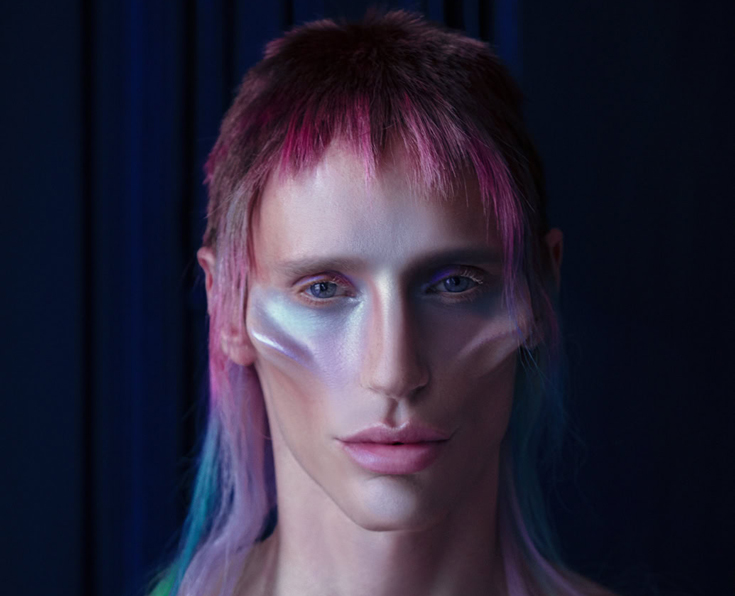
I really love expressing myself through fashion, especially in shoots and live shows.
With this project, it’s purposely become an extension of the storytelling. I’ve been drawn to pieces that feel romantic and soft. I’ve leaned into feminine, dreamy silhouettes, reflecting that youthful, innocent time. Colour has also been a big guide. Each release has its own palette, and I’ve been dressing within those worlds.
Part 2 will be very different.
Do you have a mentor? What have they taught you?
I get asked this a lot, and funnily enough, the people I would consider mentors have always reinforced that I don’t need to follow anyone else’s path.
They’ve always encouraged me to trust my gut, my story, and my vision. That’s something Heath and Ben really instilled in me.
With this album, Oscar was the same. He never tried to put words in my mouth or steer the story. He let me lead, and I followed the feeling, figuring out how to express it sonically.
What have you been listening to recently? Which other musicians are exciting you?
I just finished a run of shows supporting Meg Washington, who I absolutely adore.
She played solo for the whole tour, and hearing her music stripped back like that gave me a whole new appreciation for her complex arrangements and melodies. Her voice is incredible, and her storytelling is so vivid. I was completely entranced.
What’s something that you’re passionate about or something that is important for you to use your platform for - aside from music?
I care deeply about talking honestly about emotional abuse. Especially as it’s the kind that isn’t obvious from the outside. There’s still so much misunderstanding around it, and a lot of people don’t recognise themselves in those experiences until much later. Just like me.
If this album helps even a few people feel less alone or see something more clearly, that’s everything to me.
Rebuilding myself after that experience was enormous, and I feel strongly about being a voice for others going through it. When I started sharing this story, I was overwhelmed by how many people connected to it and felt it wasn’t talked about enough.
Over time, the album became bigger than just my story. It became something for other survivors to feel seen in and to draw strength from. This is for them.
What’s next?
I’m going to be playing shows and sharing this story as much as I can.
Part 1 is just the beginning. Part 2 moves into a very different emotional and sonic space, which is exciting and unexpected.
Right now, I just want to let this first part exist and connect with people. That feels like the most important thing.
Listen to A Love That Could Kill HERE.