Soshiotsuki Is Japan’s New Master Tailor
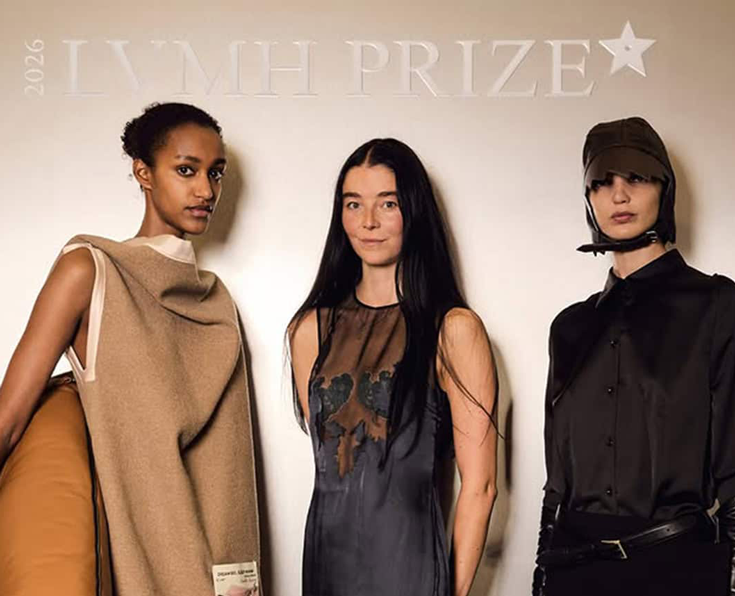
Fashion has long heralded the return of the suit. We’ve seen models sauntering down the catwalks in them and read endless articles about a tailoring resurgence. But what will it take to peel the twentysomething out of his jeans and trainers and get him in a shirt and tie? The answer could be Soshi Otsuki, the Japanese menswear designer and founder of Soshiotsuki, who took home this year’s LVMH Prize with his elegant suiting inspired by Tokyo’s salarymen.
“I think suits could be worn more casually, almost like sweatshirts,” says the designer. “I haven’t quite managed to do that myself yet, but it’s something I’d like to try in practice.” We spoke just before his show at Pitti Uomo in January. His guest spot at the Florentine men’s trade show was his first ever catwalk show – he’d unveiled his collections previously via pared-back lookbooks that looked as if they were shot in a bygone era. “Pitti has such a long history and many of the designers I’ve admired have shown there,” he says. “It’s a stage that every menswear designer dreams of presenting on.”
The collection, applauded by critics, included great suits, and plenty of them. They were joined by buttery leather blousons, trench coats and oversized knits in dusty greens and terracotta.
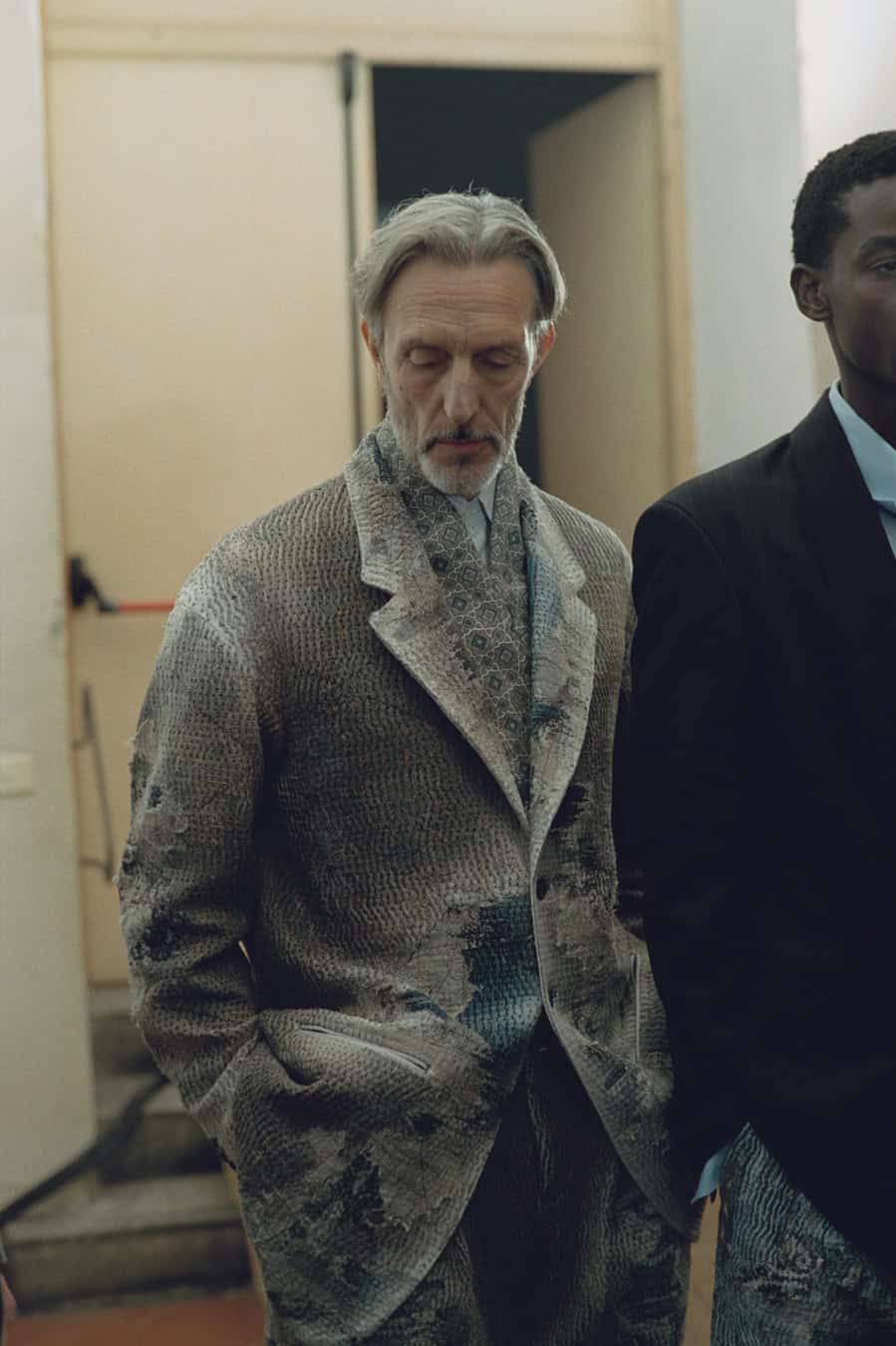
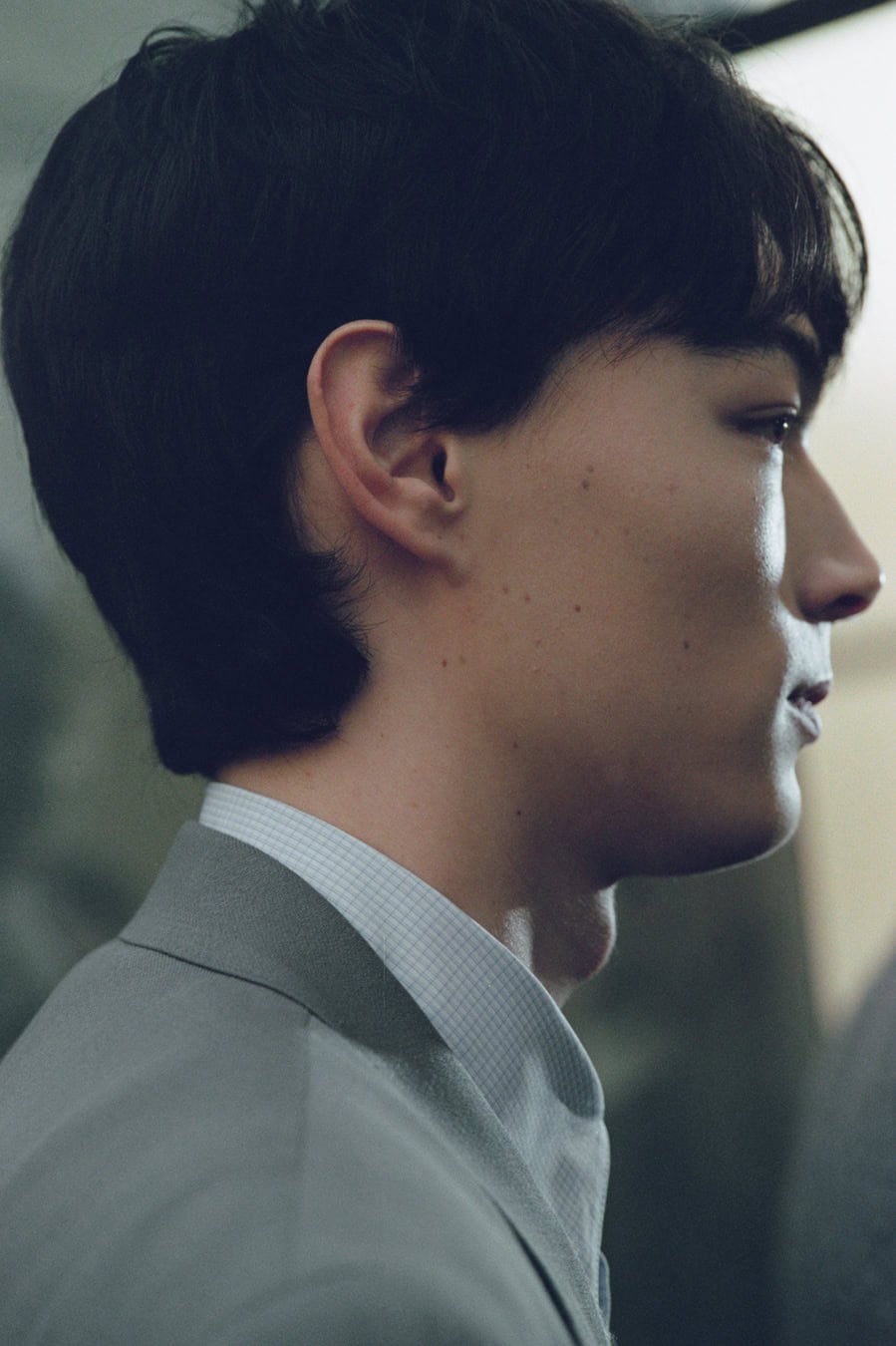
Otsuki is inspired by Japanese relationships with Western dress. A key mood is always the country’s 1980s bubble era, where inner-city businessmen would be dressed head-to-toe in suits from Europe. “The fact that the DNA of Italian brands from that era flowed into Japan and evolved uniquely through Japanese interpretation fascinated me. Since I loved that style, I felt it was something I could naturally connect with.”
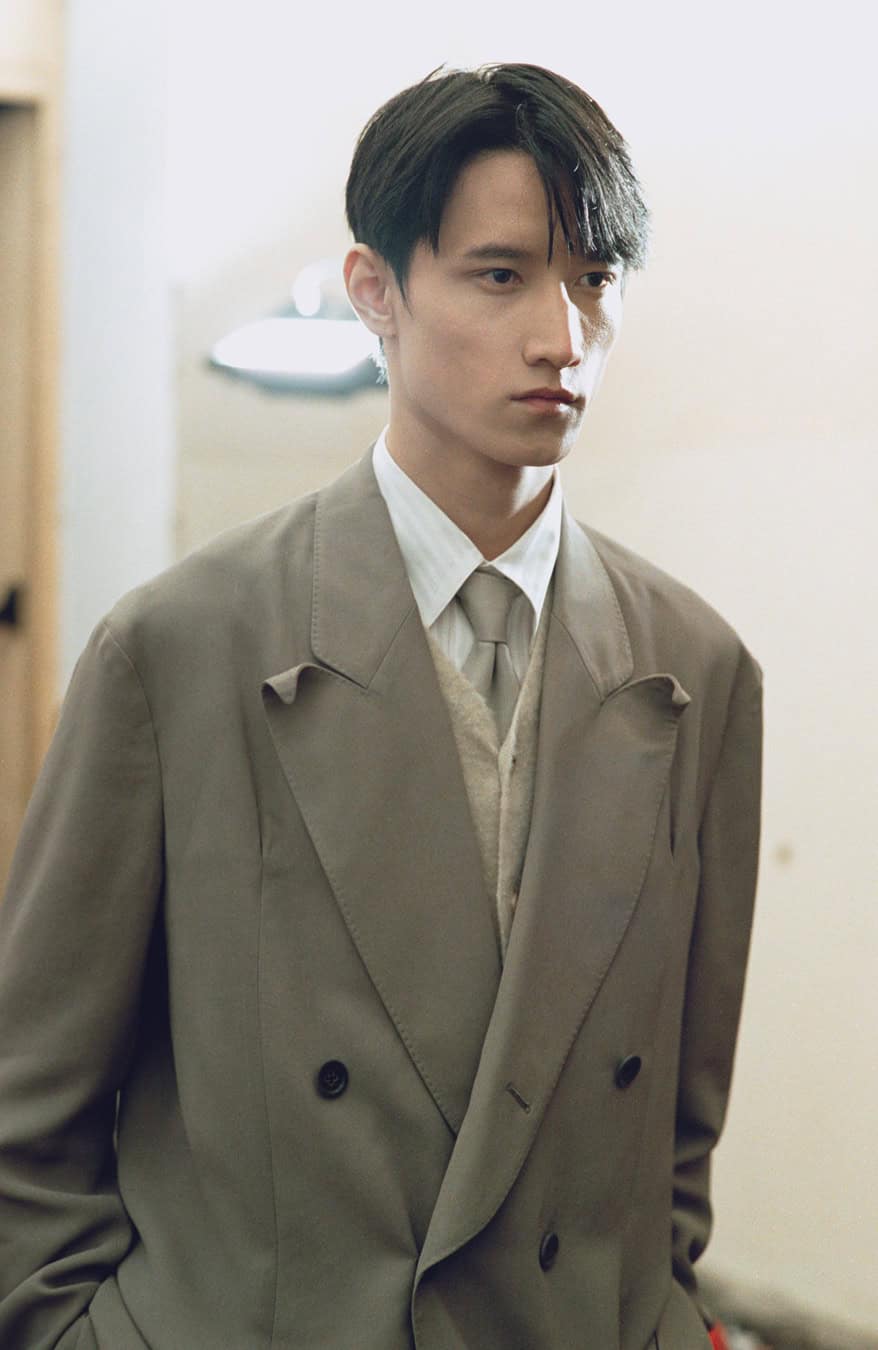
His suits, cut with the perfect amount of slouch, have been compared to the early Armani years, when the fashion maestro revolutionised menswear with his relaxed greige tailoring. Asked about what drew him to Mr Armani’s work, Otsuki says: “I simply felt it was elegant. After gaining more knowledge as I grew older, I understood that the softness, the materials used and many other factors contributed to that sense of elegance.”
While Italian tailoring is constructed around the drape that suits Western physiques, Otsuki “sometimes creates patterns that generate similar drape from the slight gaps that occur when Italian suits are adapted to the thinner frames of Japanese bodies,” he says. Seeing Tokyo’s businessmen commuting through the city has had a profound impact on his work. “Fashion is often dismissed as a frivolous industry, yet suits are accepted without question as deeply social garments. What we call ‘salaryman style’ embodies that passive, distinctly Japanese mindset, which I find fascinating.”
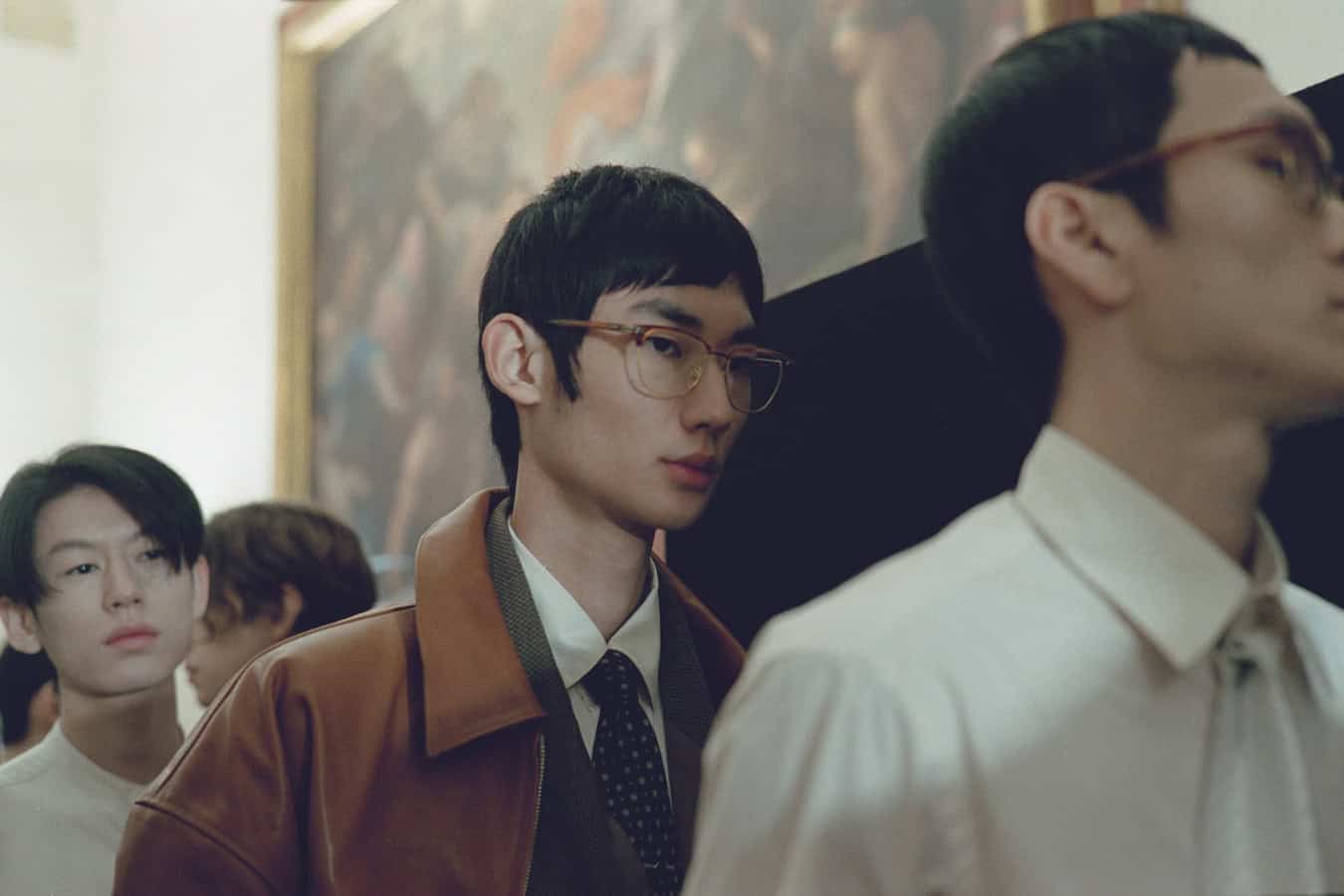
Though when he was a child, his earliest style awakening was the well-dressed characters depicted in popular manga comics. He was born in Chiba, next to Tokyo. His immediate family wasn’t in creative work. His father worked in construction and his mother was a homemaker. “However, my paternal grandmother was a certified knitting instructor, my maternal grandmother was a dressmaker and my uncle was a designer, so clothing was present within my extended family.” His mother liked to sew and, in childhood photos, you can often see Otsuki wearing a corduroy suit she made. “That was probably my first suit,” says the designer. “As far as I can remember, though, the first was a grey suit I wore at my elementary school graduation. I remember jokingly wrapping the tie around my head and pretending to be a drunk salaryman.”
The designer’s serious interest in tailoring wouldn’t come until he was in high school. “Until then, I dressed casually, but when I bought my first jacket with lapels and started wearing it as everyday clothing, I felt an exciting sense of growing up.” He would go on to study menswear at Tokyo’s esteemed Bunka Fashion College, as well as attending Coconogacco fashion school. “At Bunka, I learned patternmaking and sewing. At Coconogacco, I learned everything else.”
He launched his brand in 2015 and, a year later, after just two collections, made it to the LVMH Prize semi-finals. “In 2016, very few Japanese brands had been nominated, so I felt satisfied just being selected.” Returning again to the prestigious award for emerging talent, “I entered with the determination to make it to the finals.”
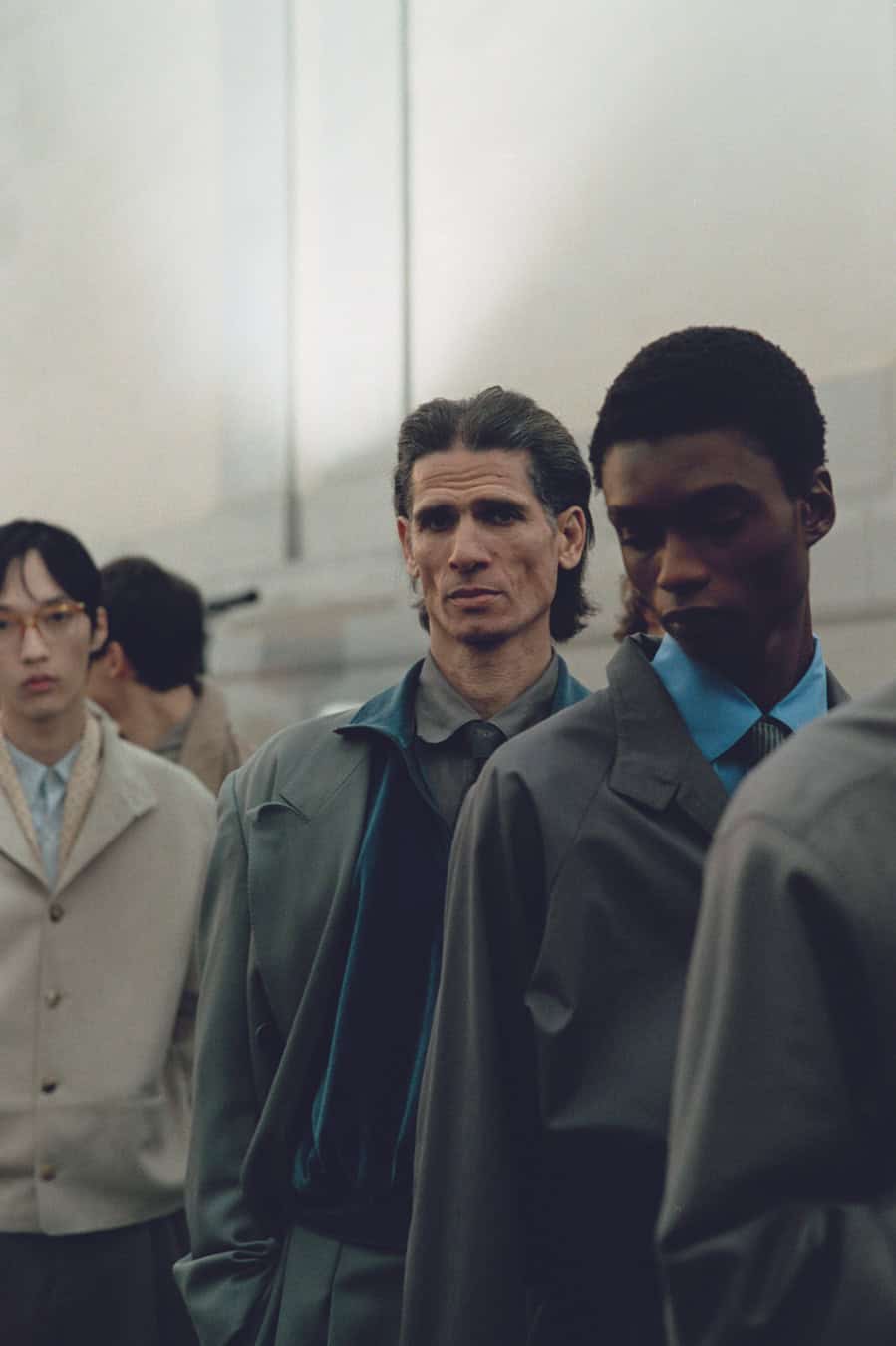
Despite his nerves, Otsuki says he enjoyed the award process. For all the people he met during the experience, it was Liren Shih, the business partner and boyfriend of British designer Steve O Smith – who took home the Karl Lagerfeld Prize – who he grew closest to. “Liren had actually modelled for Soshiotsuki when we were nominated back in 2016. It was a real surprise [to see him again].”
He plans to use the £350,000 prize money to strengthen the brand’s infrastructure. He hopes to grow to a scale where he can stage two catwalk shows a year. “The LVMH prize gave me confidence to know that the subtle nuances of Japanese sensibility, which I thought might be hard to communicate in the West, were truly appreciated,” says Otsuki. He’s already levelling up. In December, the designer unveiled a collaboration with Zara. The collection, titled A Sense of Togetherness, was inspired by the clothes his mum made for him when he was a child. An elegant taste level, passed down from one generation to the next.
Photographer LOCAL ARTIST
Text PAUL TONER
Models YIMING REN at Yu Agency, LI HAOYU and WANJIE GAO at Independent Model Management, JUNYEONG BAEK at D’Management, KIWOONG NAM and TIMILEHIN OWOLABI at Elite Milan, AKITSUGU TOMINAGA at Exiles Models, DARE SULEMANA at Ford Models, JOE BOTTOMER at Monster Management, PASCAL THULIN at Fashion Model Management, SAMUEL WILLIAMSON at Soul Artist Management, GAMAL at Morfosi Milano and ALFREDO