Tschabalala Self Is Stitching A World Of Her Own
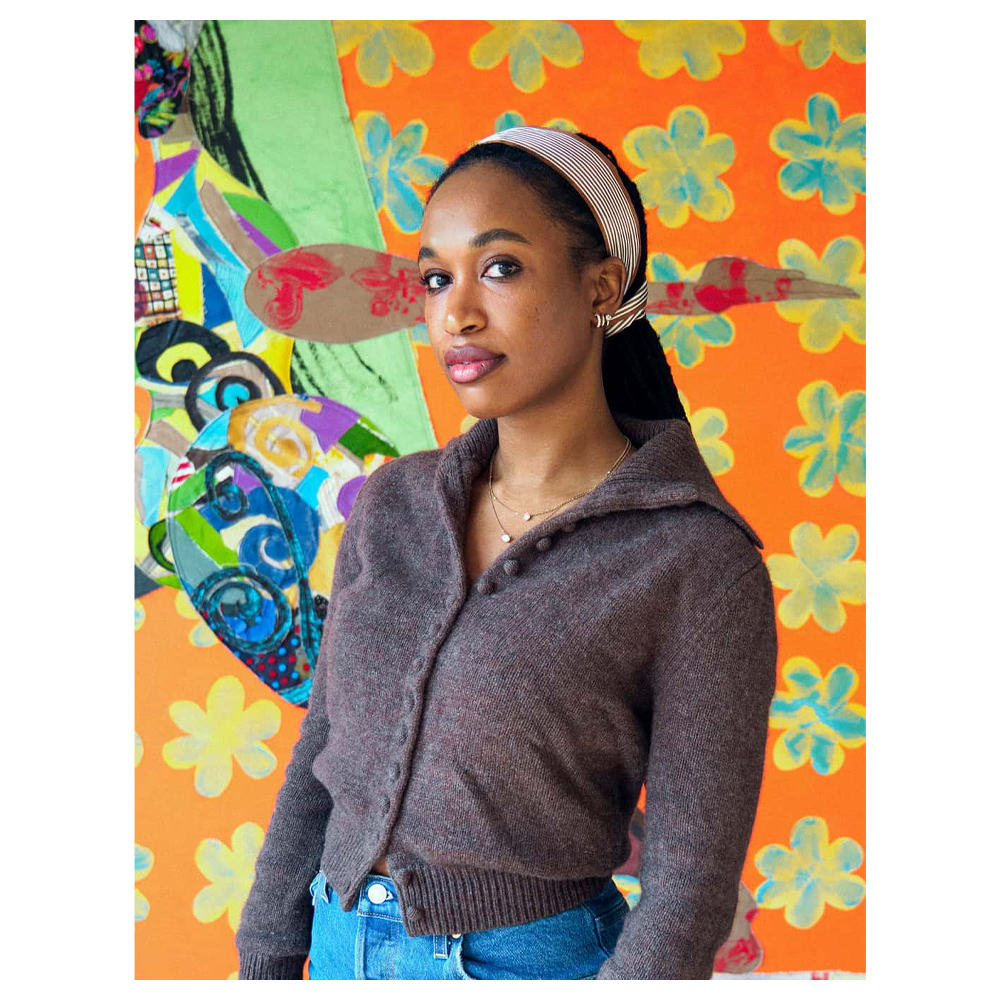
Yale-educated, Harlem-raised and relentlessly curious, Tschabalala Self is an artist who has built an unmistakable visual language that’s all her own. Upon speaking to her, her intellect and inherent poise is apparent, not just in the way she carries herself (perfect posture, btw) but in the way she converses. Each word is carefully considered without feeling filtered, each answer is thoughtful, expansive and precise.
Self is a multidisciplinary artist whose oeuvre spans collage, painting and sculpture with works that speak of embodiment, desire, intimacy and the romance of ordinary life. “[It’s] thinking about what it feels like to be living, what it feels like to have a body, to be embodied, what it feels like to just be… what it feels like to be a celestial being essentially having a human experience,” she says.
She’s in her studio in Catskill, New York, when we chat, whereas I’m in London. That’s the thing about great art: it transcends borders, making two people separated by an ocean feel like they’re sitting at the same paint-splattered worktable. Like any burgeoning young artist with a blockbuster year in the pipeline, Self has been making and imagining for as long her memory stretches.
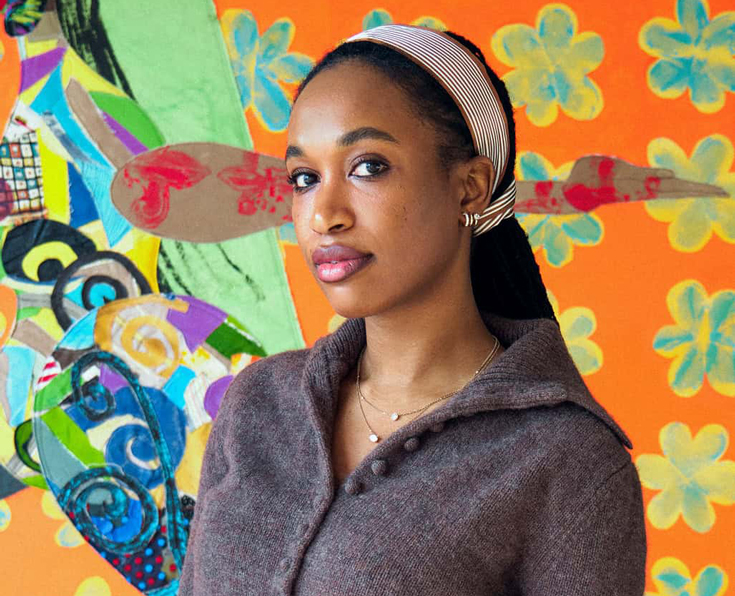
Portrait by Christian Defonte
She grew up in Harlem, a vibrant community in the heart of New York, where culture, style and self-definition were simply part of daily life. “I always made art as a child,” she says matter-of-factly. It wasn’t a revelation or some kind of fated calling – it was simply what she did. Looking back, now in her mid-thirties, Self credits something far less poetic than her innate talent. “I’m just thankful that I was able to have time and space to continue to cultivate my creative abilities.”
That idea of cultivation has shaped every stage of her career. Before the monumental stitched canvases that now occupy galleries and museum walls across the globe came finger paintings, works on paper and, eventually, a love affair with printmaking. At Bard College in Upstate New York, Self became fascinated by the medium’s immediacy and physicality before arriving at Connecticut’s Yale School of Art, where things shifted. Painting returned, sculpture entered the picture and, perhaps most importantly, she figured out how to combine the processes of printmaking with textiles. Today, cutting, stitching and layering canvas has become central to her practice. The sewing machine, she explains, became “an extension of my hand”.
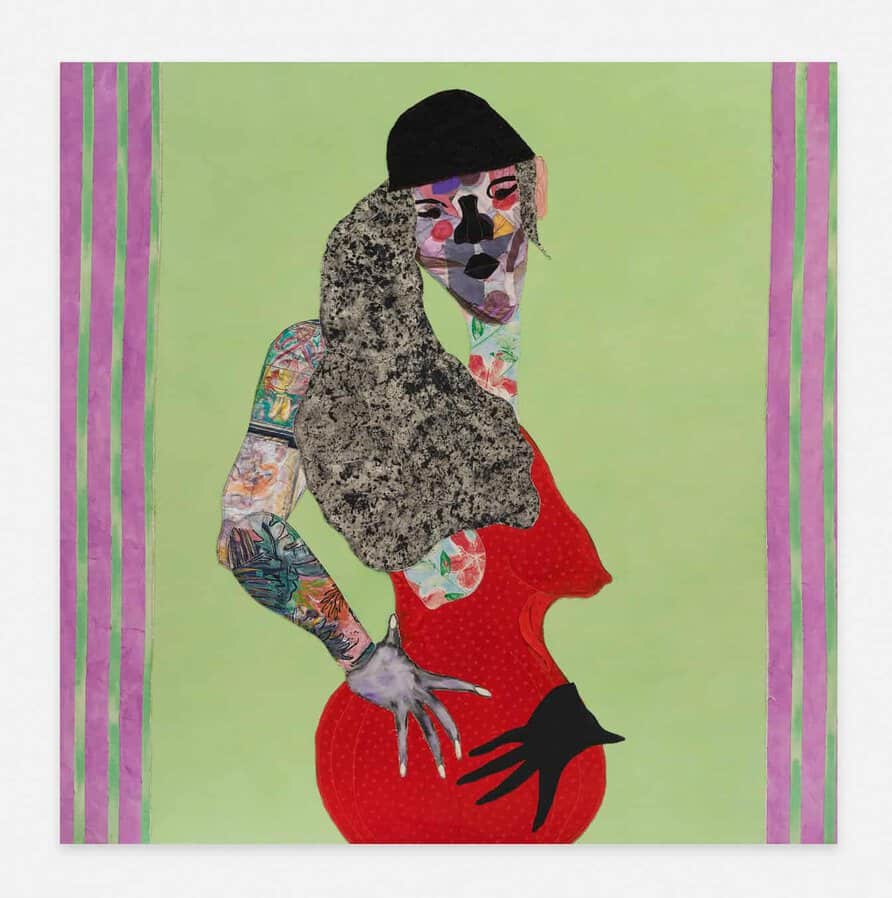
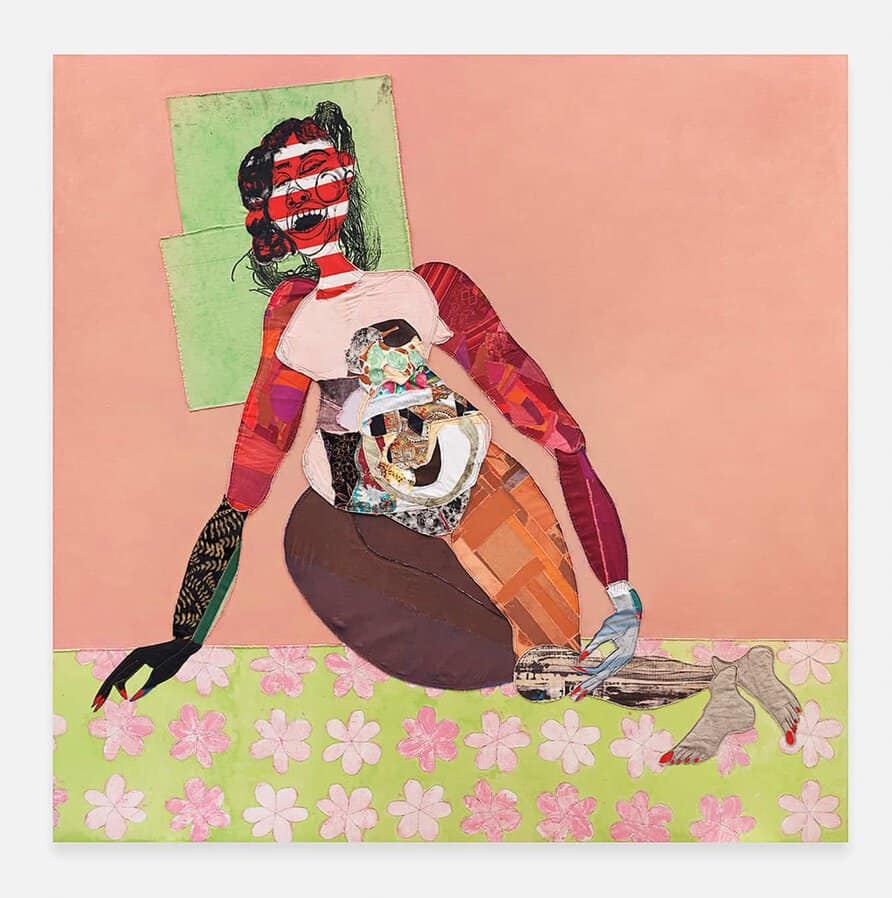
To call Self’s work collage feels too simplistic. Yes, she cuts things apart and pieces them back together, but she’s really pulling painting itself apart. Canvas is sliced, stitched and then rebuilt, exposing the textile beneath the paint rather than pretending it was never there. Suddenly, painting and sewing aren’t sitting in separate conversations anymore. They’re speaking the same language.
That relationship with textiles didn’t begin at Yale. It started much earlier, watching her mum sew around the house – Easter dresses, household projects, weekend hobbies. “[She was] the first person I saw sewing as a creative outlet.” Self laughs when she thinks about never actually sitting down long enough to learn from her at the time, but when she picked up sewing years later in graduate school, something about it already made sense.
If textiles provide one thread running through Self’s practice, Harlem provides another. Rather than pointing to artists or movements that shaped her thinking, she talks about the people she grew up around instead. That means friends, neighbours, family and the people who, as she puts it, “defined themselves for themselves”, and built worlds that made them feel both “empowered” and “beautiful”.
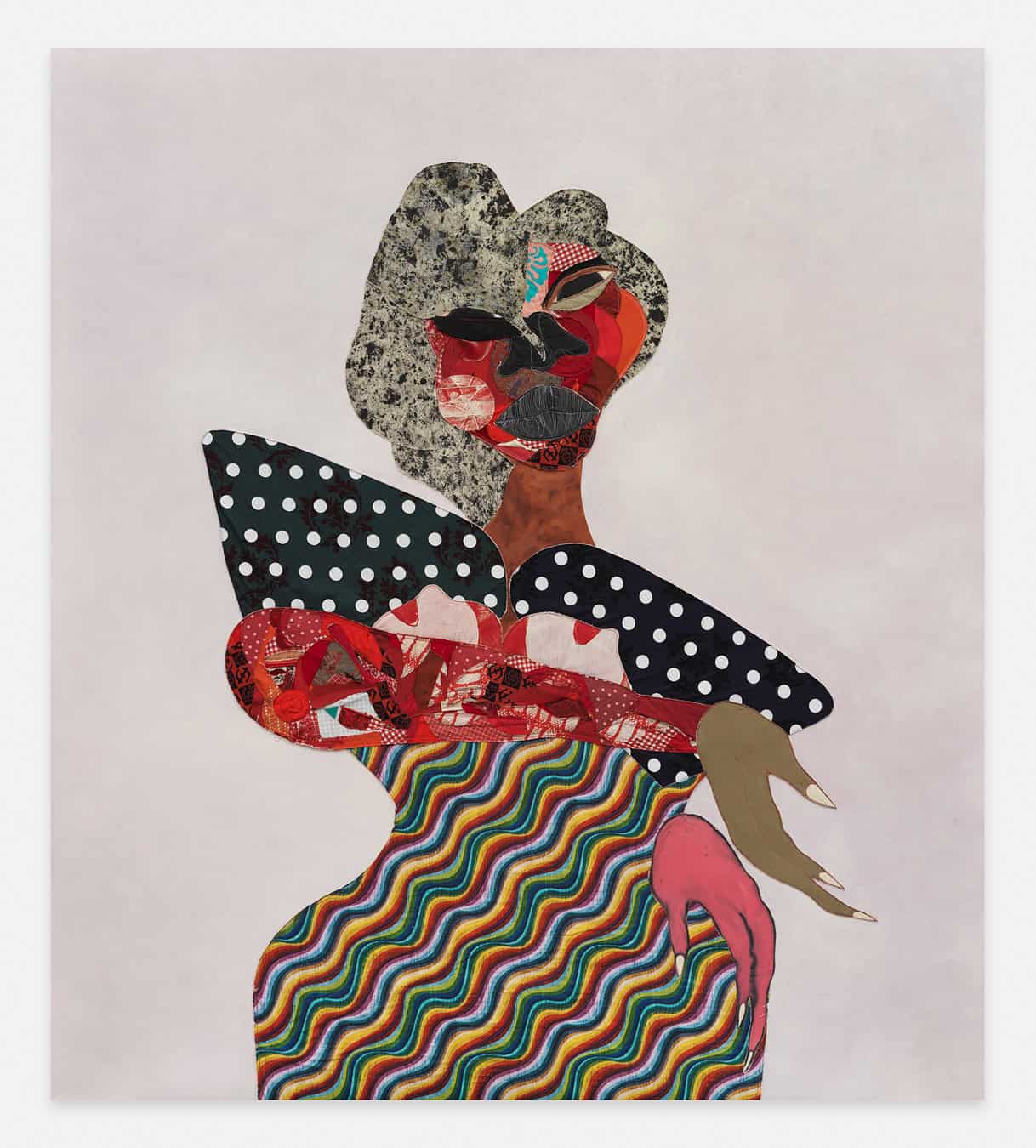
That idea still sits at the heart of everything she makes. “My work exists within a Black universe,” she says. It’s one of those statements that sounds simple until you sit with it. Self isn’t interested in making work that exists in opposition to anything. Her figures aren’t there to explain themselves or respond to dominant narratives. Instead, they’re allowed to simply exist, opening up conversations around longing, pleasure, intimacy and identity without constantly having to explain Blackness through the lens of someone else’s gaze. As she puts it, “I think that’s why I’m able to have conversations about existentialism.”
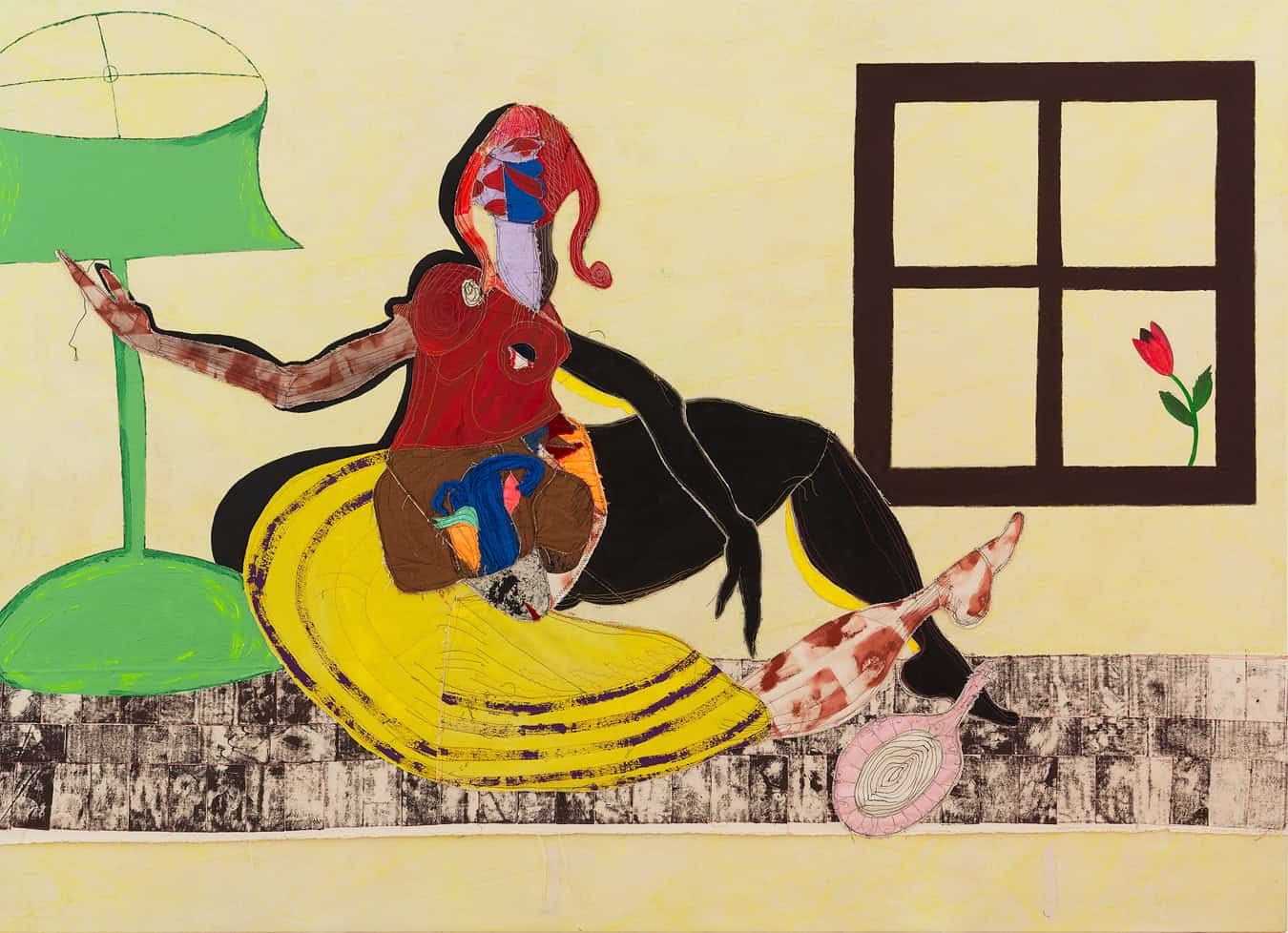
It’s also why her artworks feel so psychologically complete. Every character begins with what Self calls a “wanting” – a desire. From there, she imagines both where that “wanting” came from and what might eventually satisfy it, building the person caught somewhere between those two points. “I think most people are in both of those states,” she says.
You can feel that tension in Loner (2016). The figure’s body folds into itself, its hands exploring familiar curves with equal parts awkwardness and tenderness. Rich browns ground the subject against flashes of tangerine, cherry red and sky blue. It’s undeniably sensual, but never for spectacle. Instead, it feels private, almost as though you’re witnessing someone in a moment they didn’t realise anybody else could see.
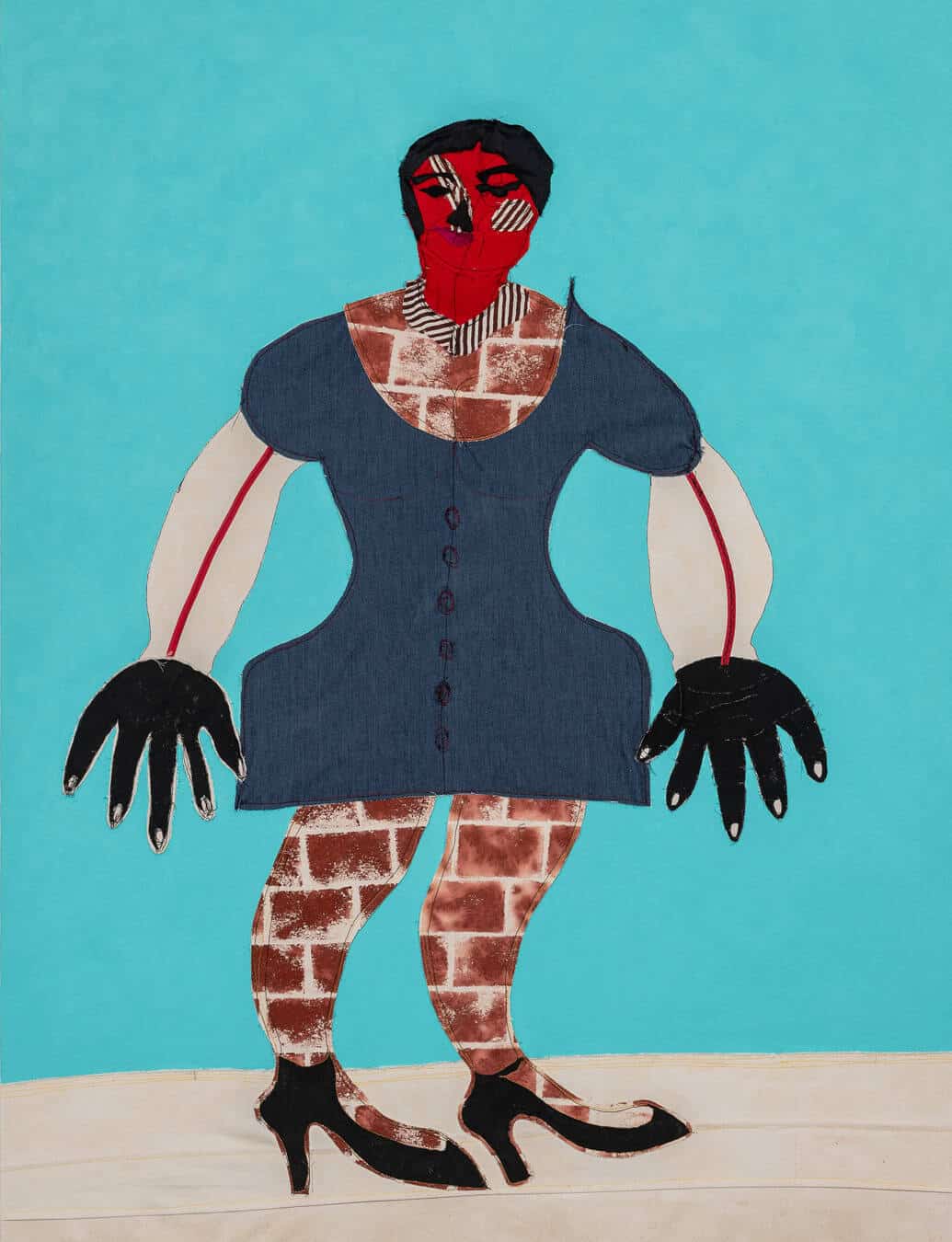
Then there’s Lenox (2019), one of Self’s personal favourites. Named after the avenue that runs through Harlem, also known as Malcolm X Boulevard, it feels tougher, more direct. There’s confidence to it, but also attitude, something Self herself attributes to where she grew up. It doesn’t romanticise Harlem, nor attempt to explain it. It simply exists within it.
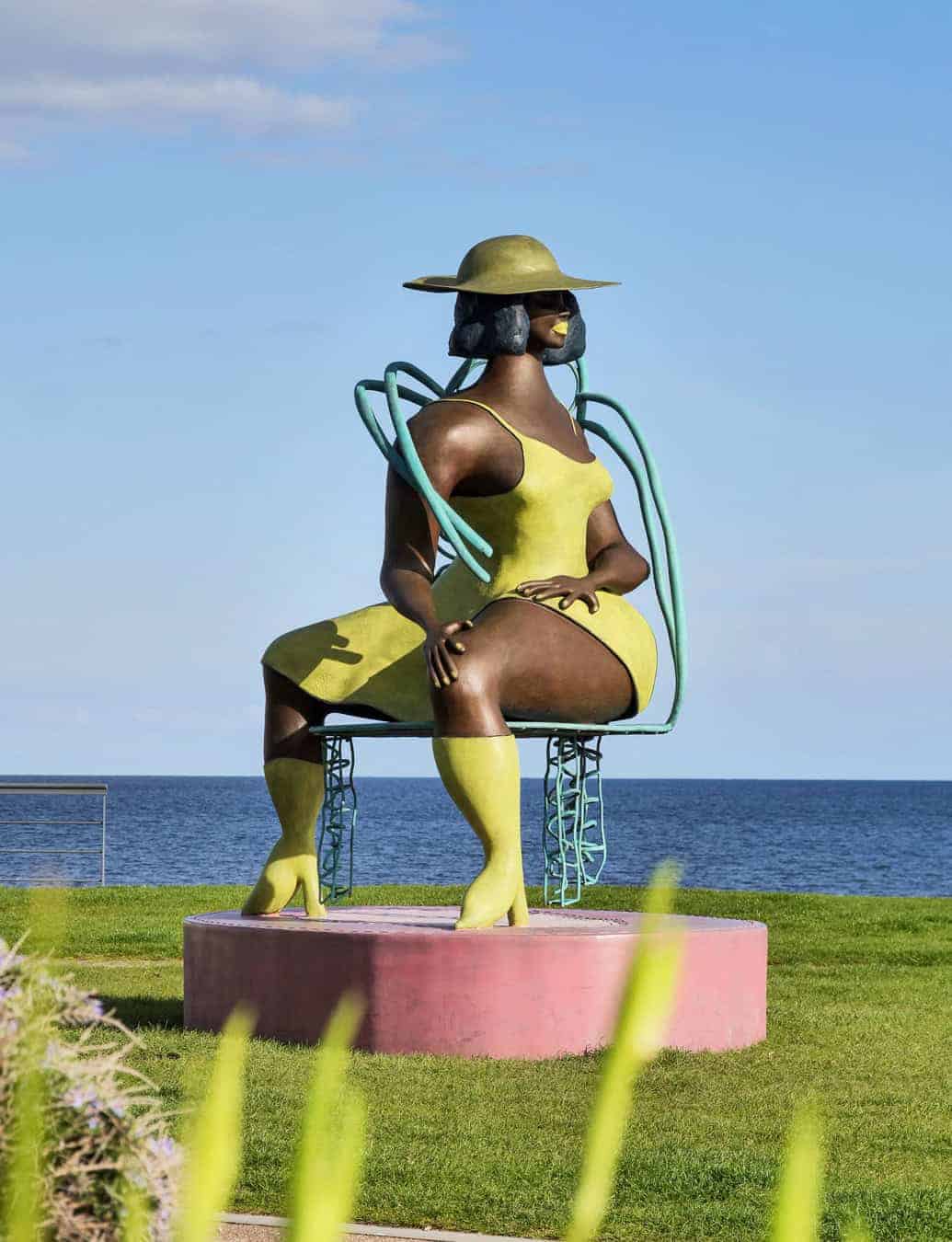
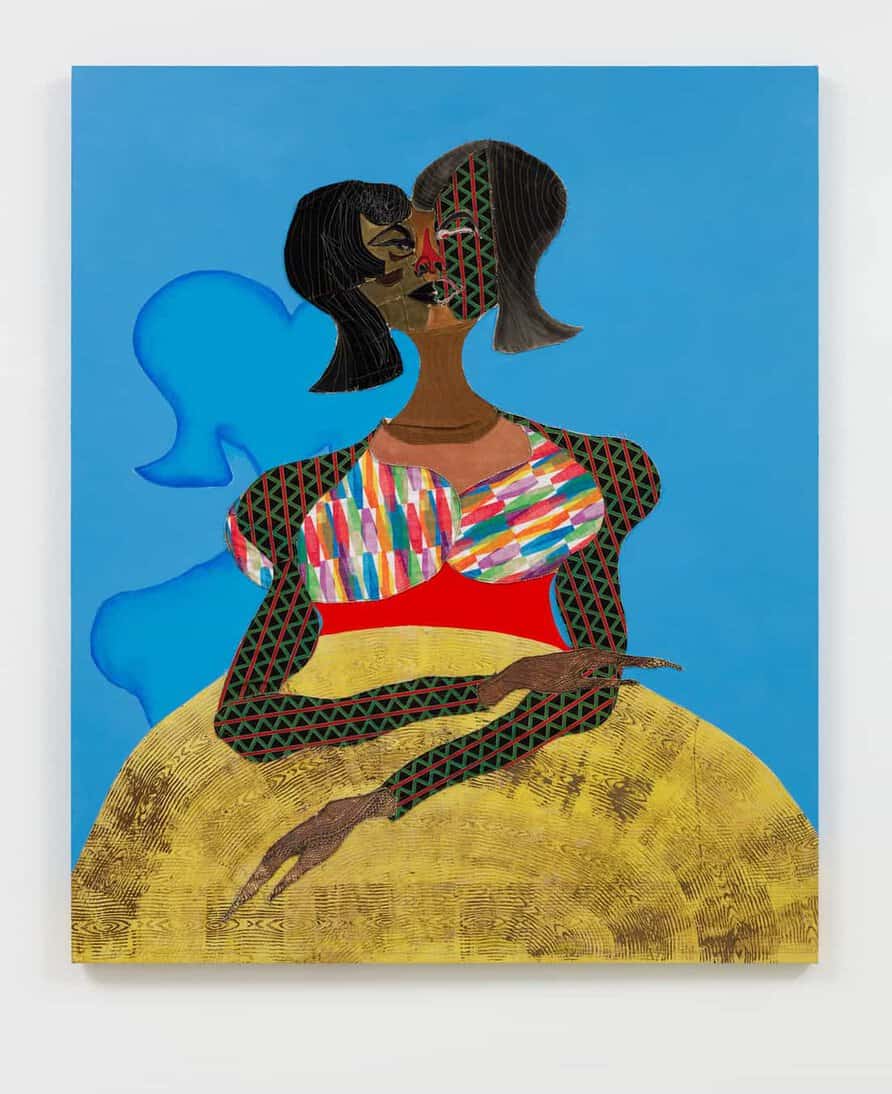
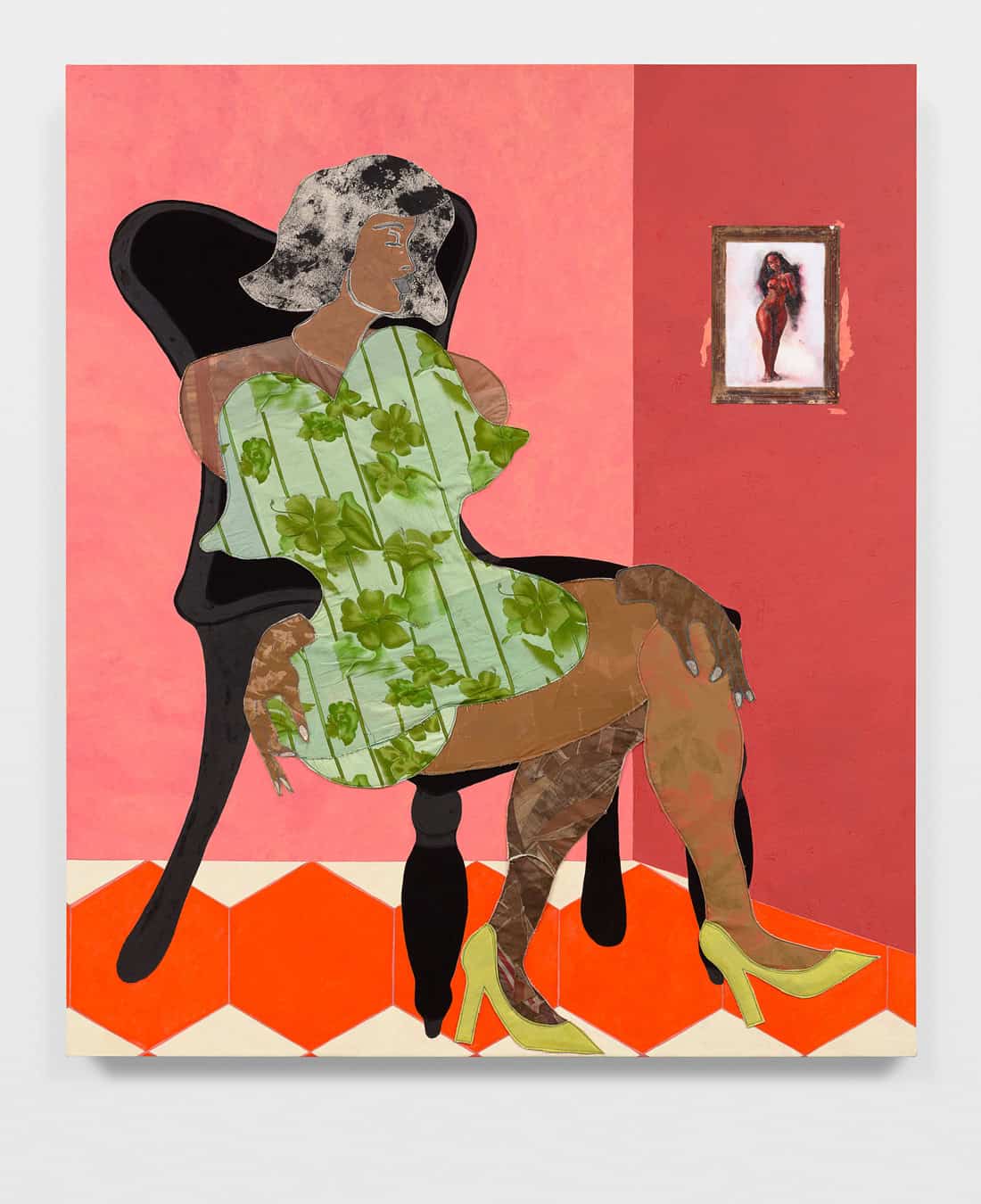
Her latest work, Women in Parlour, shifts gears again. A woman sits inside what Self imagines to be the parlour of a brownstone while another woman appears inside the painting hanging on the wall behind her. It’s domestic without feeling ordinary, elegant without trying too hard. You find yourself wondering whether she’s waiting for someone, resting after they’ve left, or simply enjoying the rare luxury of being alone. Self deliberately leaves that space open. She is most interested in those quieter scenes. “I feel like that’s where the real magic of life exists,” she says.
Self talks about watching people in those in-between moments, when they’re making tea, staring out of a window, or simply lost in thought. Growing up as the youngest child, she spent plenty of time quietly observing the adults around her as they forgot anyone was watching. It’s those fleeting moments, she believes, that reveal who people really are.
Pleasure and desire sit at the centre of that thinking, too. “It’s very, very important,” she says. “The main thing I want for my figures, and for myself, is to have pleasure and joy.”
For someone whose work wrestles with ideas as expansive as identity, embodiment and existence, Self is surprisingly free of pretension. She’ll happily discuss existentialism one minute before talking about her mum’s sewing machine the next, never making either feel more important than the other.
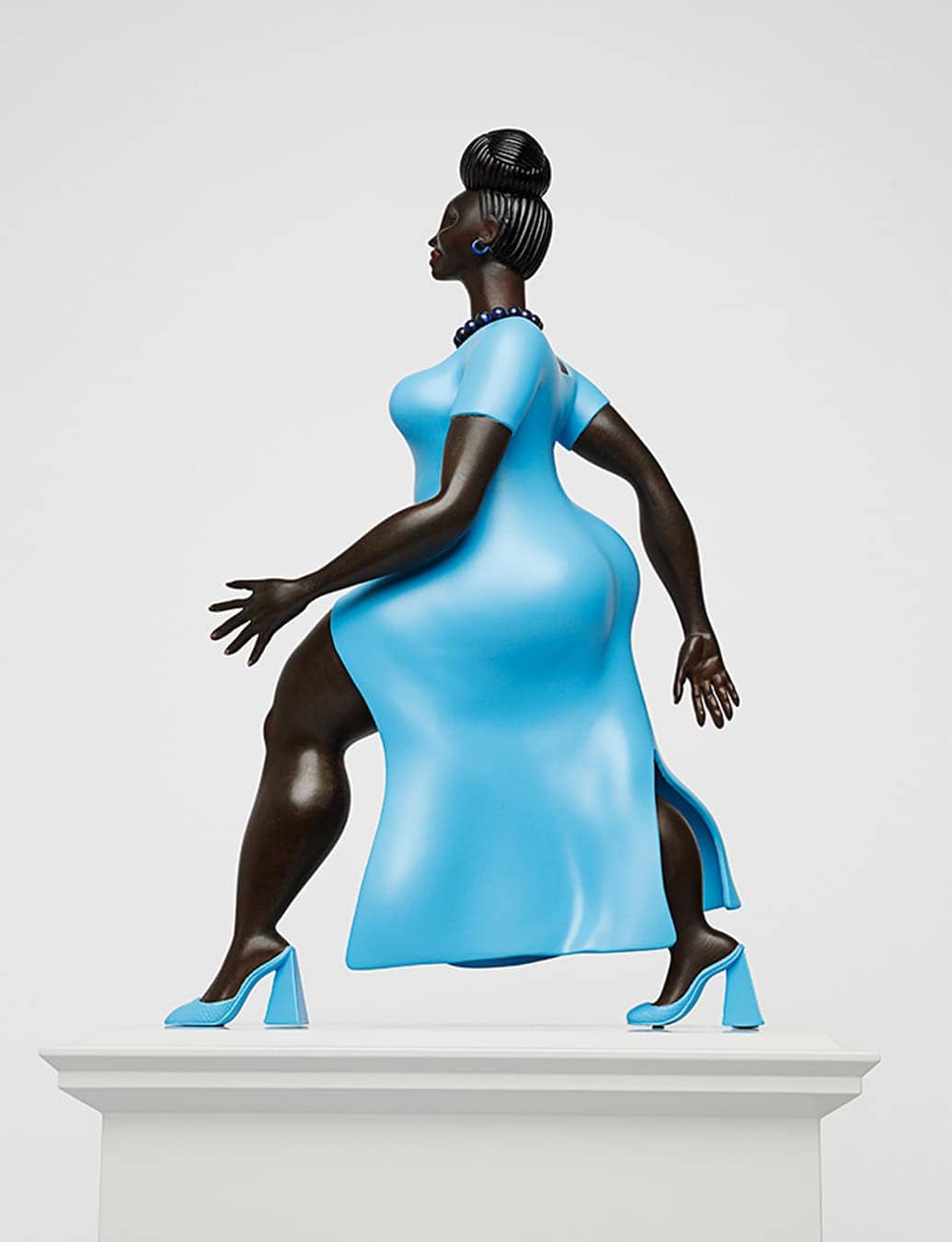
This autumn, Londoners can experience her work on an altogether different scale as Lady in Blue has arrived as a major public sculpture on the Fourth Plinth in Trafalgar Square. Replacing Mexican artist Teresa Margolles’s Mil Veces un Instante, it’s a project Self is visibly excited about, largely because it places the work where she believes it belongs. “My work has always been for the public and the world,” she says.
It’s hard to imagine a more fitting next step for an artist whose work has always been rooted in human moments. Self has spent the past decade building worlds from stitched canvas, paint and fragments of everyday life. Now, she’s inviting the rest of us into them.