Christie’s Is Seeing A Surge Of Gen Z And Millennial Buyers
At Christie’s, the jewellery department is seeing a different kind of bidder walk through the door. Less old-school collector, more fashion obsessive – and about 30 years younger too. They know their stones, but they also know their references: Elsa Peretti cuffs on Pinterest boards, 1980s campaign imagery saved to Instagram, archival Van Cleef & Arpels clipped next to runway looks and TikTok slideshows devoted entirely to vintage Bvlgari. It seems that jewellery is no longer being bought purely as inheritance or investment. Instead, it’s being styled, documented, obsessed over and worn with intent by a fresh-faced generation. And the market is responding accordingly.
Ahead of its London Jewels sale, (which kicked off May 22 and will run until June 5) Christie’s identified a sharp shift in buyer behaviour following a billion-dollar year across luxury sales in 2025. Millennials and Gen Z now make up 44 per cent of bidders and buyers across the house’s luxury categories, while female buyers have risen by 20 per cent year on year. And as a result, Christie’s has observed a move away from quiet, conventional stones towards pieces with impact: think vivid coloured gems, natural pearls, bold signatures and jewellery with a story attached. Meanwhile, provenance, rarity and distinctive design are driving interest as much as carat size.

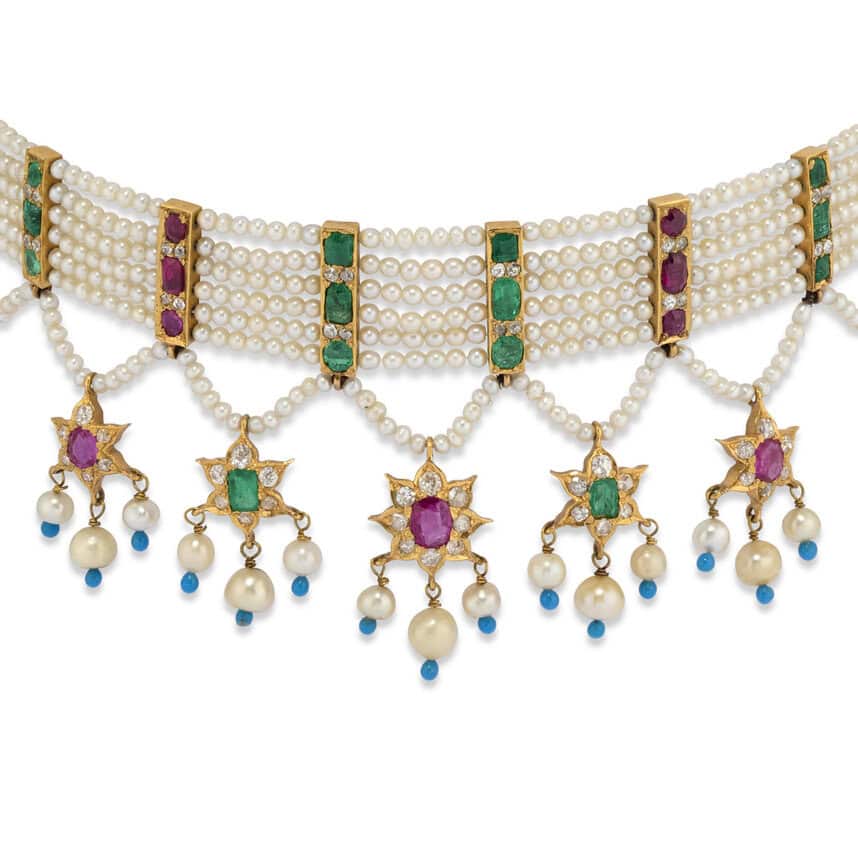
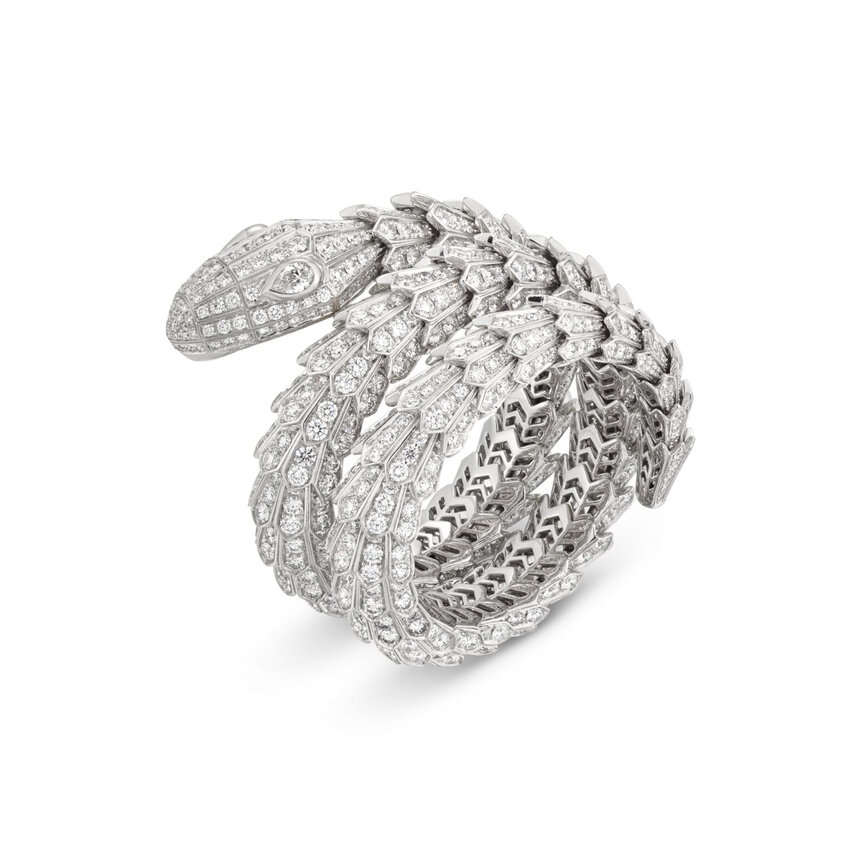
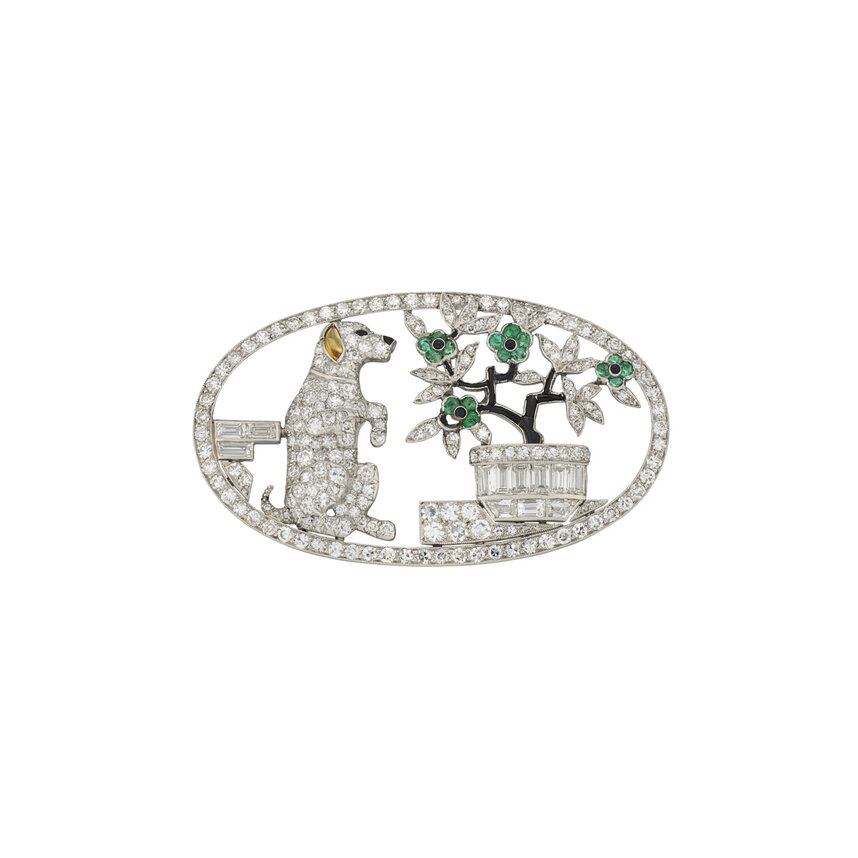
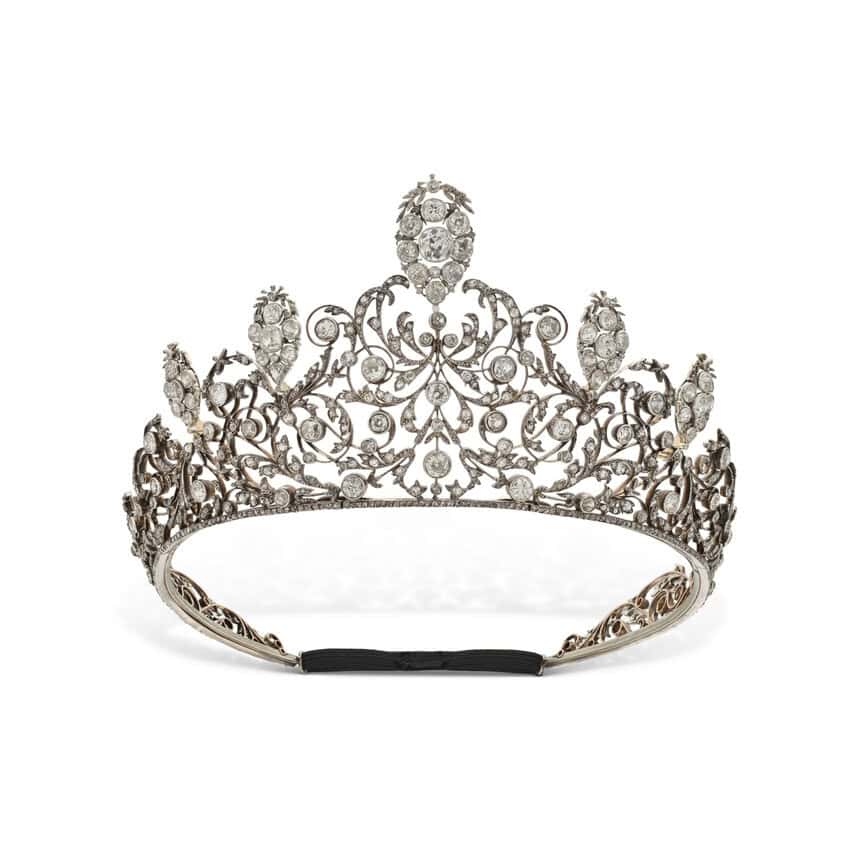
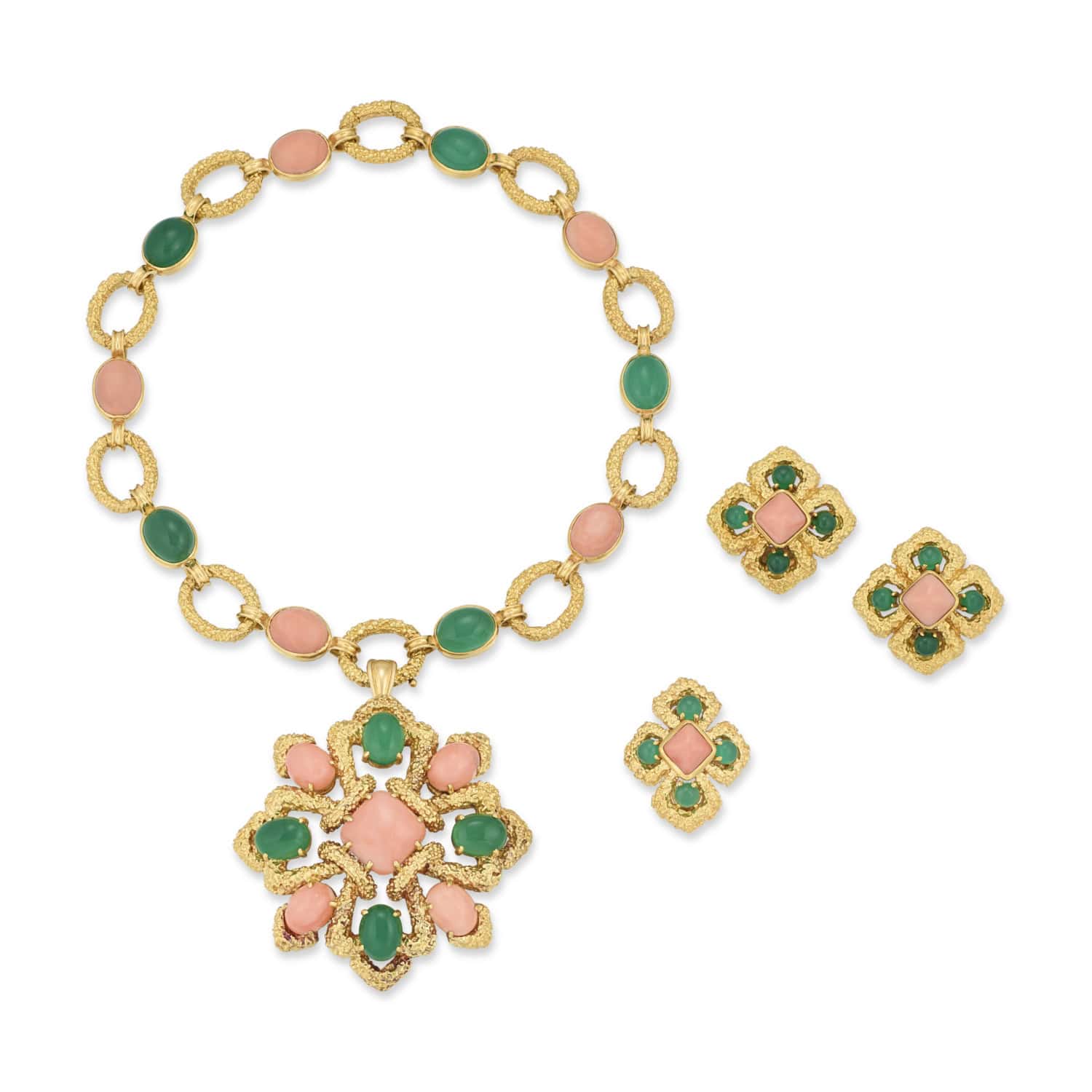
The ongoing sale reads almost like a study in that changing taste. There are antique tiaras and royal jewels, yes, but the pieces with the loudest magnetism feel deeply connected to fashion right now. A 1970s coral and chrysoprase Delphes suite by Van Cleef & Arpels has the saturated glamour of a Slim Aarons photograph. An Art Deco emerald, onyx and citrine brooch from the maison feels graphic and modern enough to pin onto a tailored jacket tomorrow morning. A flexible diamond Serpenti bangle by Bvlgari delivers the kind of unapologetic excess Gen Z buyers tend to love precisely because it refuses subtlety.
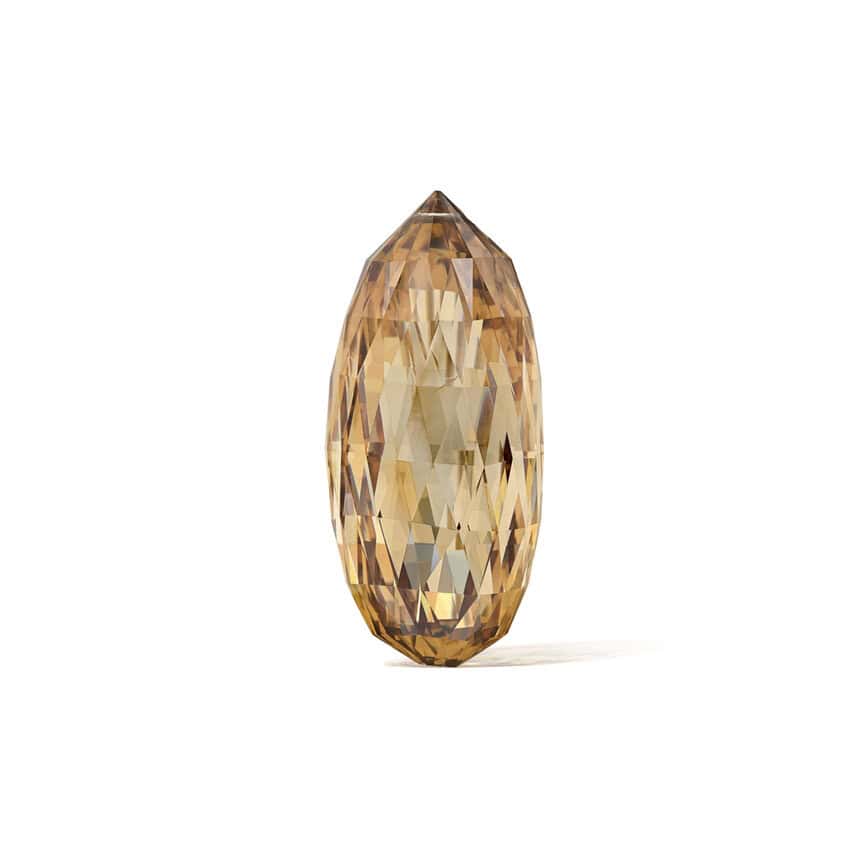
Then there are the stones themselves: electric emeralds, a vivid Fancy Deep Pink diamond and a huge 66.40 carat Fancy Orange-Brown diamond pendant that feels almost surreal in scale. Across the sale, colour dominates. Personality dominates too. The old rules around jewellery collecting – buy safe, buy classic, buy discreet – are being replaced by something more expressive. Buyers want pieces that look incredible, feel rare and say something instantly. Which is exactly why Christie’s is paying attention.
Here, we chat to Henry Bailey, head of the jewellery department at Christie’s, London, about this generational shift, the key lots we can expect to see and what trends should come to light at London Jewels 2026.
What trends are you expecting to see at the upcoming London Jewels sale?
Henry Bailey: We continue to see strong demand for pieces that combine clarity of design with versatility and strong wearability. Maisons such as Cartier, Van Cleef & Arpels and Bvlgari remain particularly sought after – especially when the jewels are instantly recognisable and work across different settings, from everyday styling to more formal occasions.
For Gen Z and Millennial buyers in particular, sustainability is becoming an increasingly important consideration. There is a growing appreciation for the circular nature of jewellery, and buying at auction is often seen as a more considered way to acquire exceptional pieces with history, rather than defaulting to newly manufactured jewellery.
Alongside this, there is a clear desire for individuality. We see that younger clients are drawn to pieces that feel personal and distinctive, jewels that stand apart from mass-market production and offer something less uniform. That sense of discovery and uniqueness is really what continues to set the auction market apart for them.
Can you talk us through some of the key lots available and the type of client you expect to procure them?
HB: The sale presents a strong balance of signed jewels, important coloured gemstones and distinctive design-led pieces, including standout lots such as Cartier Zebra Cuff, a Bvlgari Diamond ring and Van Cleef & Arpels emerald and diamond earrings.
We expect the top end of the sale, particularly rare coloured stones and historic jewels, to attract experienced collectors and connoisseurs. Alongside this, signed and highly wearable pieces tend to appeal to a broader group of clients, including newer buyers entering the category and looking for recognisable, design-led jewels from leading houses.
When did you start to notice Millennial and Gen Z buyers moving into the luxury space? Was it a very pronounced or quieter, more gradual shift?
HB: It has been a gradual shift that accelerated significantly during and after the pandemic. Digital engagement became second nature, and auction participation widened rapidly as a result.
What has been particularly notable since then is not just entry into the market, but the confidence with which younger buyers now participate – often highly informed, decisive and already well versed in both design houses and market dynamics.
What have you observed this new generation of buyers reaching for most when shopping across luxury categories? Is there much difference between the two demographics, or even within each respective generation?
HB: Jewellery, in particular, is increasingly seen as something to be lived with and styled, rather than reserved for specific occasions.
However, what stands out most is that collecting today is individual and driven by passion. There isn’t a single defining profile for Millennial or Gen Z buyers, each client is curating in a personal way, based on their own taste, interests, and connection to a piece.
Some are drawn to bold, design-led jewels, others to rarity, craftsmanship or historic significance, but the common thread is that they are buying what resonates with them personally. It is this sense of individuality and passion-led collecting that is shaping the market today, which is very exciting to see.
What sets this new generation of buyers apart from those prior in terms of the attitude they bring to a sale?
HB: For this generation, decisions are informed by a combination of digital research, cultural moments and personal taste.
We are also seeing how strongly cultural visibility influences interest, whether that’s major museum exhibitions, jewellery in fashion editorials or pieces seen on the red carpet. Celebrity moments continue to play a role in shaping awareness and desirability, often bringing specific styles, cuts or stones back into focus.
For example, there has been renewed attention around coloured diamonds and warmer-toned stones following recent red carpet appearances. In this sale, we are offering a Fancy Orange-Brown briolette-cut diamond of 66.40 carats, which reflects this growing interest in so-called “desert-coloured” stones
Have you had to change how your sales operate at Christie’s at all to reflect these generational changes in consumer habits?
HB: Absolutely. The most significant shift has been the move towards a digital-first ecosystem. A lot of our jewellery sales now take place online, such as London Jewels online (open for bidding from May 22 to June 5).
We have also evolved how we communicate with clients, with a greater emphasis on instant messaging, video and more visual ways of sharing how jewels look when worn. There’s more of an emphasis is on immediacy, accessibility and global reach.
In your view, what’s driving this sort of spending among Millennials and Gen Z?
Several factors are at play, increased cultural visibility of jewellery, easier access to global auctions and a growing appreciation for sustainability. But perhaps most importantly, there is a shift towards collecting with intent. Younger buyers are building collections that reflect identity, taste and values. Jewellery sits particularly strongly within this mindset, it is “wearable art”.
Christie’s have also noted that there’s been a 20 per cent rise year-on-year in female clients in the luxury categories. Is this a marked difference compared to gendered spending patterns of the past? What do things look like with regard to the male demographic?
HB: We are seeing a continued broadening of the client base, which reflects a more general shift in how people engage with jewellery today.
Female clients are increasingly active as independent collectors and decision-makers. At the same time, male clients remain very engaged.
Overall, the key point is that collecting is becoming less defined by traditional gendered patterns. The market today is more fluid, with clients engaging based on personal taste and interest rather than fixed categories.
Are we living through a particularly dramatic shift in how we’re shopping luxury or is this a – historically – fairly typical evolution of the market? How do you see this developing?
HB: It is both an evolution and an acceleration. Luxury, in particular jewellery, has always adapted to change, but what feels different now is the pace. We are seeing a stronger appetite for knowledge and detail, with clients wanting to understand more about what they are buying. At the same time, the fundamentals remain unchanged: rarity, quality and craftsmanship continue to underpin the market.
Top image: VAN CLEEF & ARPELS EMERALD AND DIAMOND EARRINGS, circular-cut emeralds and diamonds, gold (French marks), circa 1960, signed Van Cleef & Arpels, maker’s marks (Péry & Fils), numbered, associated green Van Cleef & Arpels pouch, Size/Dimensions: 2.7 cm, Gross Weight: 23.8 grams. Photography courtesy of Christie’s.