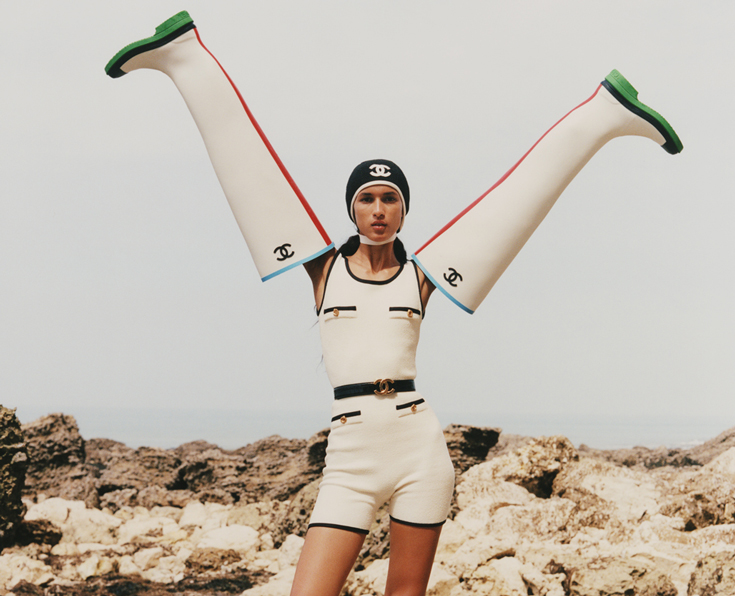
I Went To The Art School On The Meaning Of Heritage
Heritage is not what a house preserves. It’s what it dares to question. The AW26 season made that clear. Givenchy’s Sarah Burton didn’t look at Rembrandt and see an aesthetic. She saw a craftsperson who spent weeks on a single lace cuff because the cuff was the entire argument. And she answered back the same way. Stitch by stitch. On a real dress. On a real body. She placed headpieces on her models and one, a red turban inspired by a Jan van Eyck painting from 1433, most likely a self-portrait, was originally a man’s. Heritage doesn’t respect gender boundaries. It never did.
Dior’s Jonathan Anderson went further. He didn’t reference Versailles. He embedded its silk fragments directly into the garment. History not as inspiration. But as material. As substance you can touch.
He built an immersive landscape inside the Jardin des Tuileries of artificial water lilies, Monet made physical, and then went deeper. In the 17th century, Louis XIV enforced a strict dress code for anyone entering those same gardens. Clothing as law. Anderson took those rigid frock coats apart. Chopped them. Reshaped them. Made chantilly lace out of what used to be an instrument of control. That’s not a reference. That’s an argument. And then there are the houses where heritage becomes a logo. A monogram. A recognisable surface. A quote without a response. That gap between designers who actually answer back and those who simply repeat is where this piece lives. Because heritage is never neutral. It’s always a decision about whose craft gets preserved. Whose culture gets archived. Whose history counts.
But then there’s the other side of this season. And it’s harder to name. Because it doesn’t look wrong, it looks very good. There are houses that don’t question their archive. They inhabit it. They live inside it like a well-furnished room, moving a chair occasionally, but the walls stay the same. The monogram. The print. The silhouette you recognise from across the room because you’ve always recognised it. This isn’t a comment on craft quality. That’s often exceptional. It’s an observation about the question being asked. Or not asked. An archive is not an argument. It’s a reserve. What you do with it, what you interrogate, what you refuse, what you bend: that’s the work. But when the archive becomes the selling point, the proof of your own legitimacy, heritage stops being an action. It becomes a possession. And you defend what you possess. You don’t transform it.
There’s a particular kind of confidence that settles into a house after a certain point. The confidence of a brand that knows it doesn’t need to explain itself. The show happens. The codes appear. The press recognises them instantly and calls it mastery. And maybe it is mastery. But mastery of what, exactly? Of repetition. Of producing something so legible it requires no effort to decode. That legibility is the product. The heritage is the proof of purchase, which is fine, commercially. It works. It has always worked. But it’s worth being honest about what it is: heritage as a brand asset, not as a living practice. Heritage as capital you draw on, not a conversation you’re still having. The archive becomes a mirror. And mirrors only ever show you what you already look like. We’ve all seen the format by now. The anniversary campaign. The archival deep dive presented as a press release. The ‘return to our roots’ collection that looks, on close inspection, exactly like the last four collections. A designer gets replaced, a new one arrives, and within two seasons they’re talking about going back to the founder’s original vision. Heritage as a reset button.
Heritage as a way of not having to say anything new. There’s a particular version of this that happens around anniversaries. A house turns 100 years old and suddenly the archive is everywhere. Museum exhibitions. Coffee table books. Documentaries. Social content showing the seamstresses of 1962 in black and white.
And then the collection arrives and it’s a greatest hit. The signature silhouette. The signature colour. The signature detail that has appeared in every collection for 30 years, now framed as a tribute rather than a habit. The problem isn’t the anniversary. The problem is the confusion between remembering and repeating. There’s also a quieter version, which is arguably more insidious. Houses that invoke heritage not through spectacle but through texture. The way a campaign is lit to look like an old photograph. The choice to shoot in the original atelier, or in a location that implies one. The language of craftsmanship used in press materials to describe clothes that were produced at industrial scale in factories the brand would prefer you not to think about. Heritage as atmosphere. Heritage as a feeling that’s been carefully engineered to make you believe something about a garment that the garment itself cannot deliver.
That gap between the story a house tells about its past and what the clothes are actually made of, actually made by and actually connected to is where the real conversation begins. Not the one in the press release. The one that happens when you look at the clothes closely enough to ask the question the brand was hoping you wouldn’t. There’s also something worth saying about what happens to a customer in that transaction. When heritage is pure legibility, when the point is recognition, not discovery, it asks nothing of the person wearing it. No interpretation required. No discomfort, no surprise. The garment arrives pre-explained. You wear the history without having to think about it. And there’s a market for that. A very large, very profitable market. But somewhere in that exchange, fashion stops being a conversation and becomes a certificate. Proof that you know the codes. Proof that you belong. The clothes aren’t asking anything. They’re confirming something that you already believed.
So let’s ask the harder question. When we talk about heritage in fashion, we’re always talking about specific heritages. The ones with archives. The ones with institutional memory. The ones that got documented. There’s a craft tradition behind almost every technique that moves through luxury fashion. The pleating. The embroidery. The natural dyes. And very often, the people who developed those techniques over generations are not in the story. Their names are not in the archive. What gets preserved is the aesthetic output. What gets lost is the knowledge, the labour, the community it came from. This is not ancient history, it’s happening now. Collections reference motifs from Central Asia, West Africa, South Asia and more, and the artisans who carry those traditions are unnamed. The technique gets celebrated. The person doesn’t. Think about what craft knowledge actually is. It isn’t written down. It lives in hands, in muscle memory, in the relationship between a craftsperson and a material built over years. It gets passed on between people, in rooms, through demonstration.
When that transmission breaks, when a technique gets absorbed into a collection without anyone tracking where it came from or who taught it, something disappears that can’t be recovered from an archive, because it was never in the archive to begin with. There’s a word for borrowing a form without acknowledging its origin. In academic writing it has consequences. In fashion it gets called inspiration. Heritage, in this sense, is always an act of selection. Someone decided what was worth keeping. Someone decided whose craft was legible as history and whose was raw material. The monogram of a Parisian house gets protected, institutionalised, taught in fashion schools. The hand-dyed textile tradition of a Kazakh weaver gets called a reference point for a mood board. That’s not a coincidence. That’s a structure. And it’s a structure that has been in place long enough that most people inside the industry don’t notice it anymore. It feels like the natural order of things. Some heritages become institutions. Others become influences. The difference between the two has very little to do with the quality of the craft and a great deal to do with geography, economics and who had access to the rooms where decisions got made. And the most interesting designers working right now are the ones who understand that. Who go into their own archives and ask not just how was this made, but who made it and what it cost them, and do we still know their name.
What makes a garment genuinely connected to history isn’t how old the reference is. It’s whether the designer was willing to be changed by it. Those are the real stakes of a season like this one. Not which house went furthest back in time or whose archive is the most impressive. But which designers came out of the research process different from when they went in. Unsettled. Rearranged. With something they didn’t expect.
That discomfort is what shows up in the clothes. You can feel it. The difference between a garment that says look how much we know and a garment that says we found something we didn’t fully understand and made it anyway. The second kind is rarer. It’s also the only kind that lasts.
Fashion has always had this tension at its centre. The pull between the archive as security and as provocation. Between heritage as proof of who you are and heritage as an argument you’re still in the middle of losing.
The houses that treat it as security will keep producing beautiful things. Recognisable things. Things that photograph well and sell well and reinforce exactly what everyone already believes about them. But they won’t surprise anyone. Including themselves. That’s what heritage actually is, when it’s working. Not a logo. Not a legacy. It’s a question you haven’t finished answering.
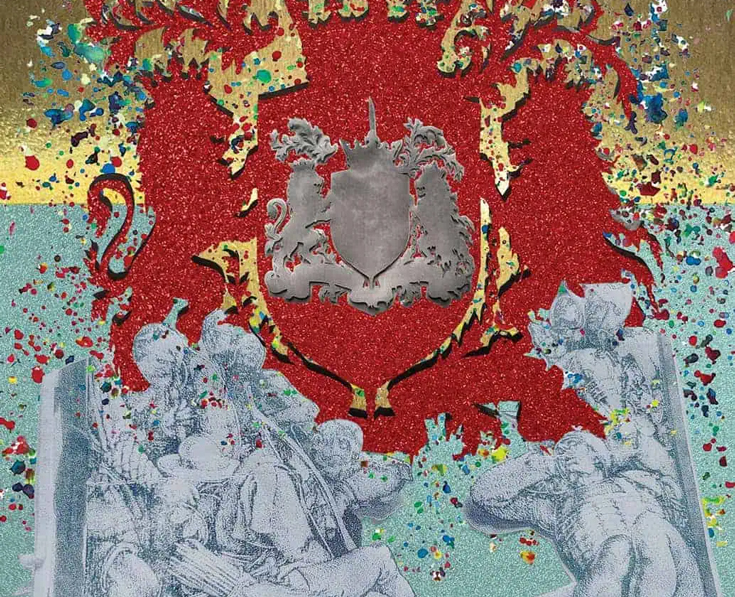
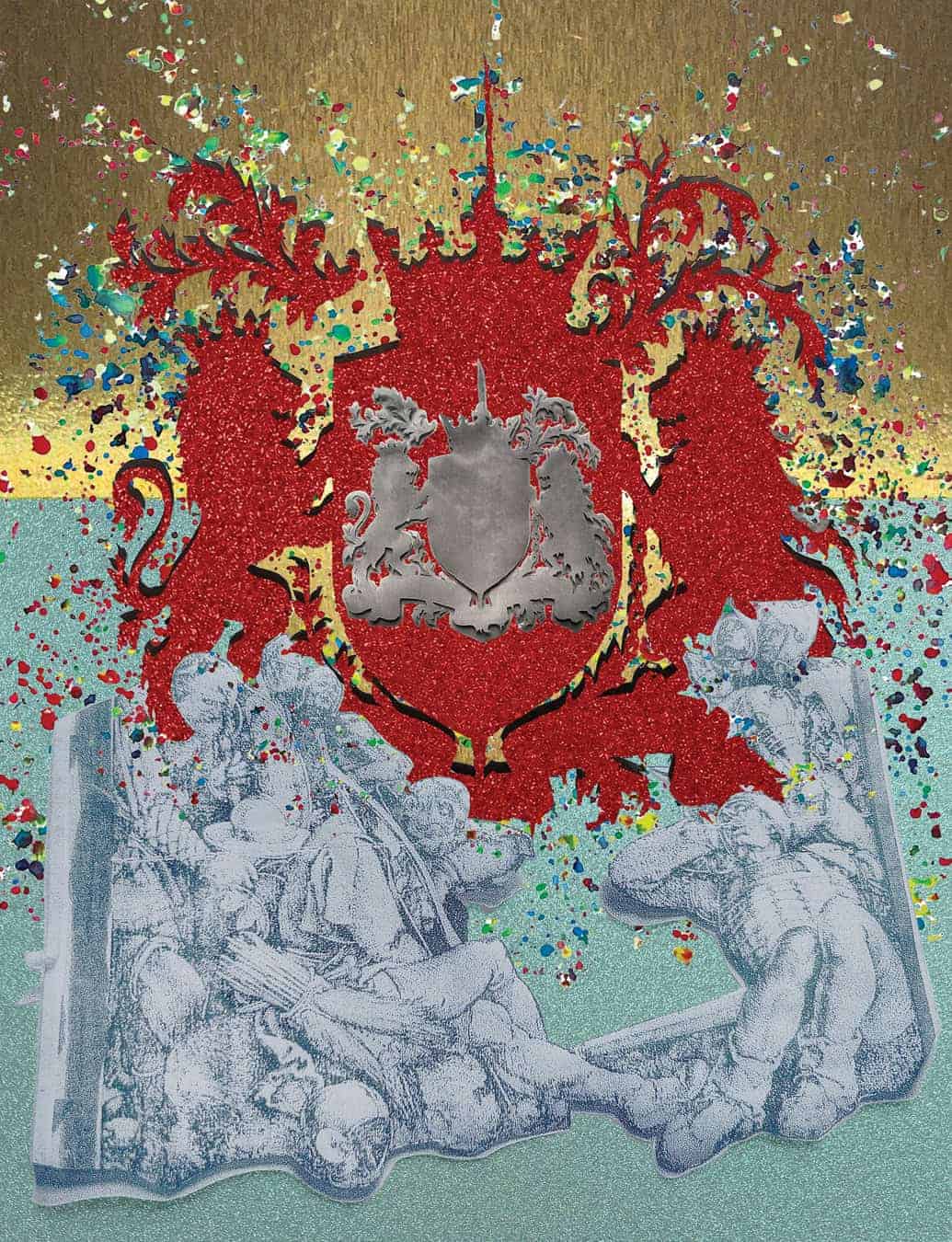
Collage by James Stopforth. Issue 28 of 10 Magazine – FUTURE, LEGACY, HERITAGE – is on newsstands now. Order your copy here.