Carla Sozzani On Azzedine Alaïa’s Love Of Christian Dior

Mid-century, deep within the sun-soaked landscapes of Tunisia, a bright-eyed Azzedine Alaïa would discover something course-altering. Through the glossy pages of fashion-focused magazines, he stumbled upon the visionary work of couturier Christian Dior and, fascinated by the master’s architectural precision and instinct for sculpting the female form, Alaïa found himself drawn irrevocably towards fashion design. It was in 1956 that the young designer-to-be undertook a speedy four-day internship at Maison Dior in Paris, where he absorbed the charged rhythm of the atelier, closely observed its inner workings and witnessed the creation of a collection – a fleeting yet formative encounter that would linger in his memory for decades.
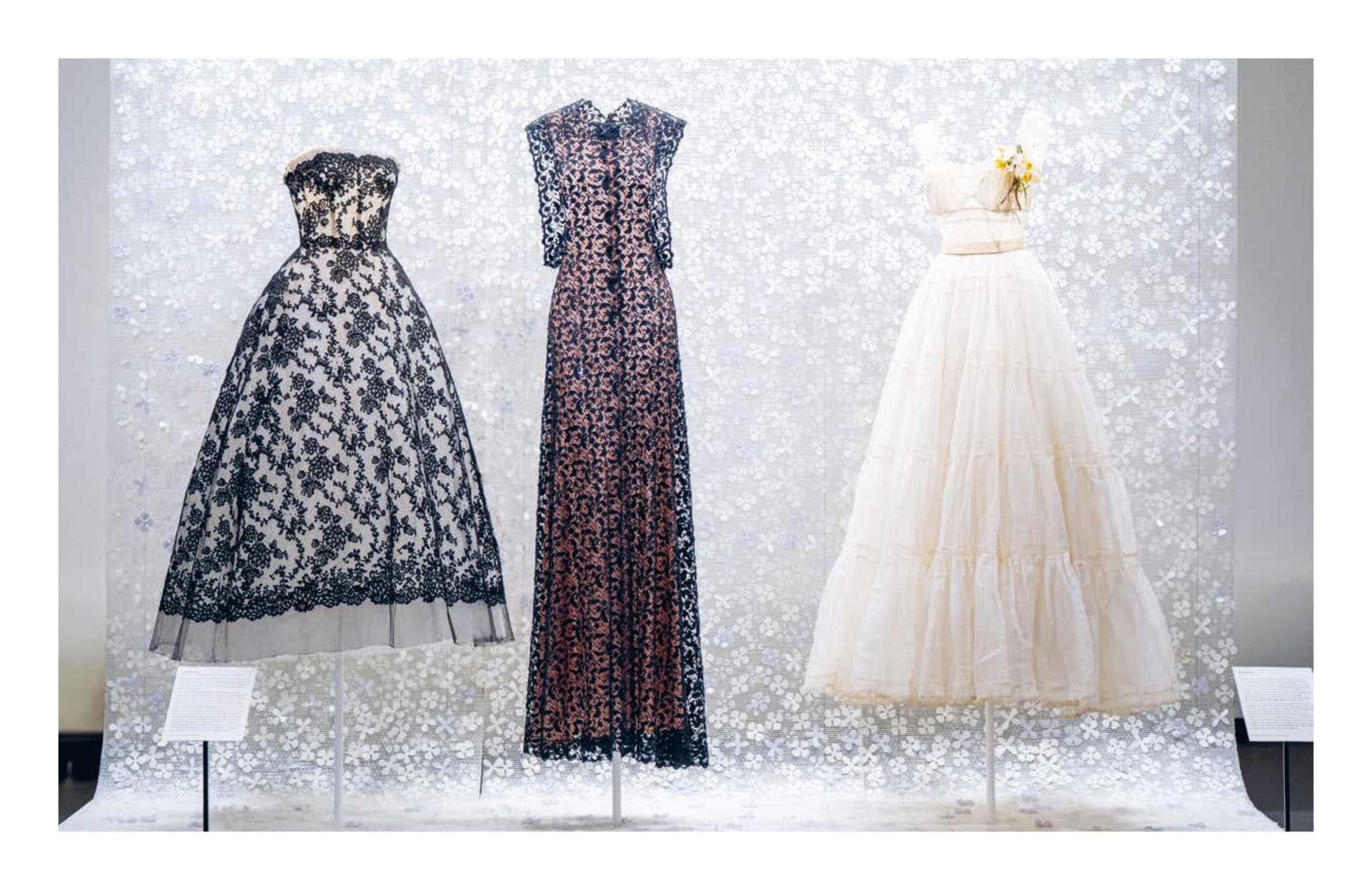
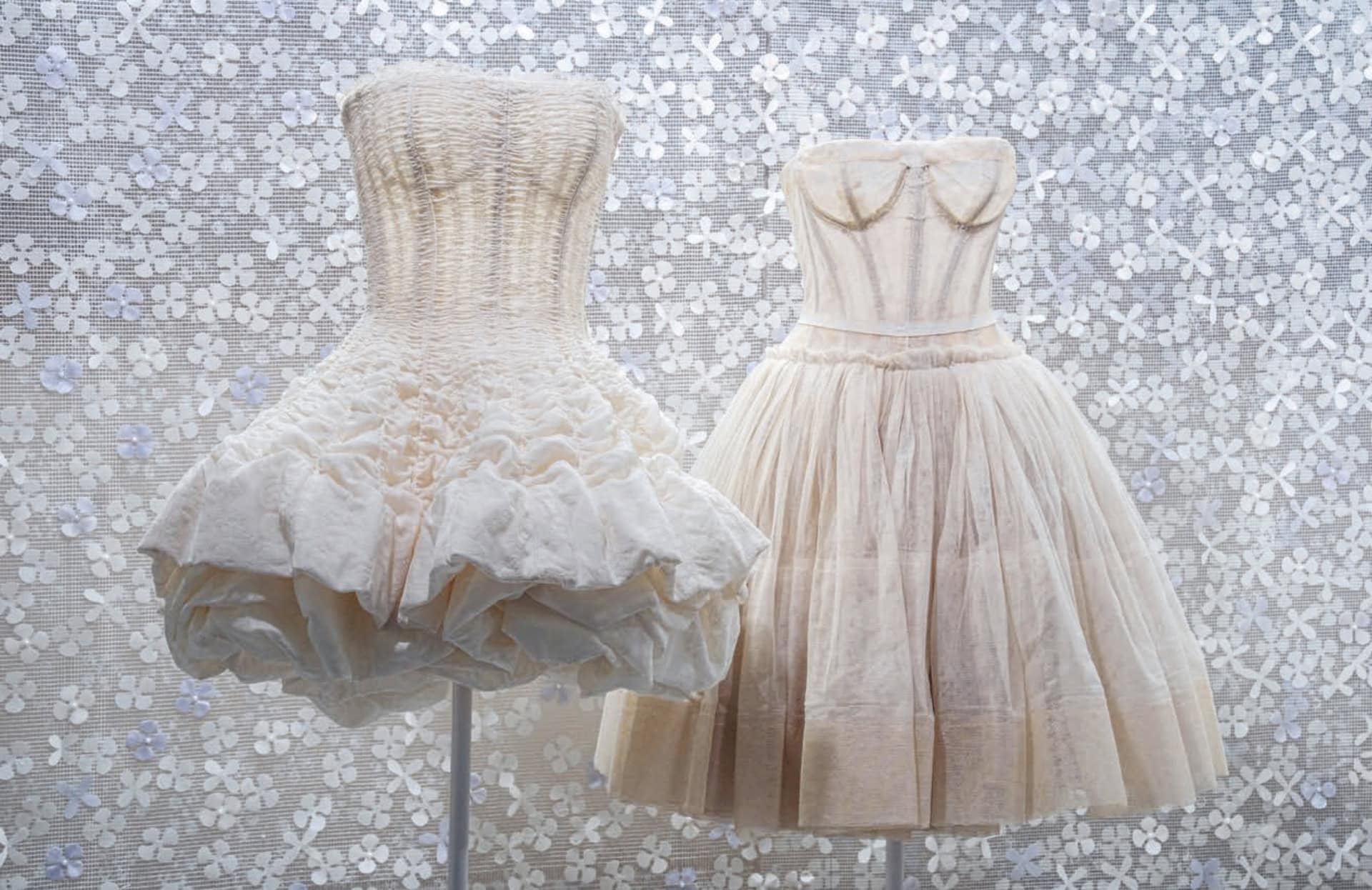
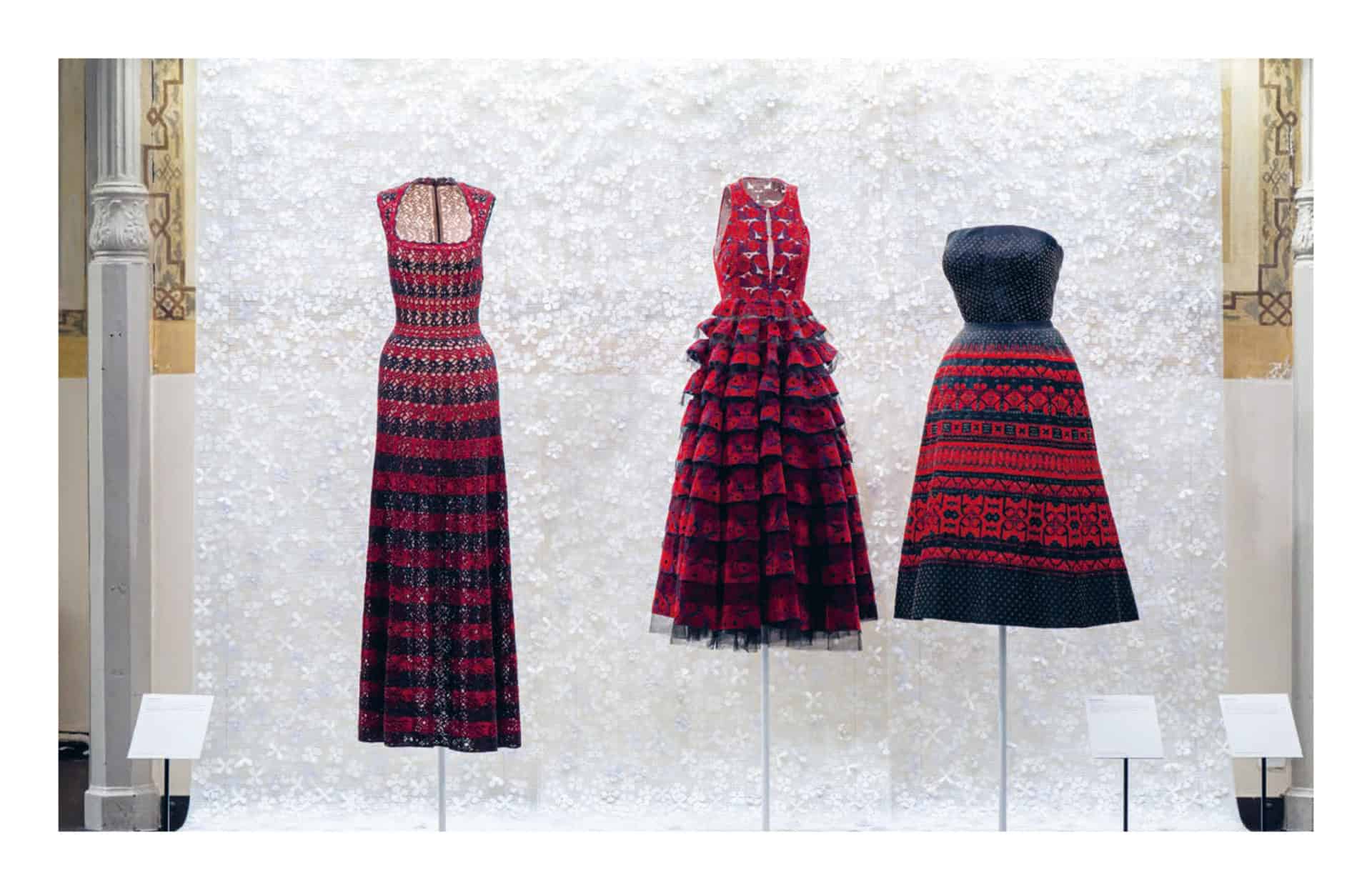
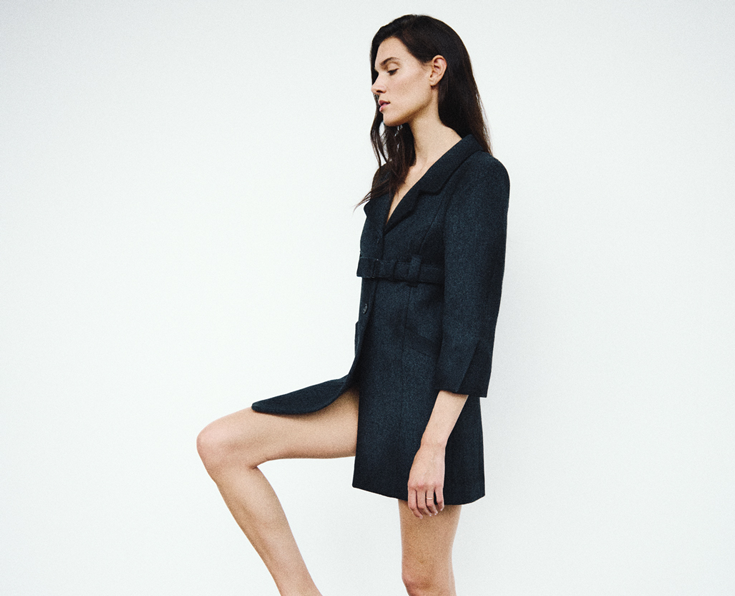
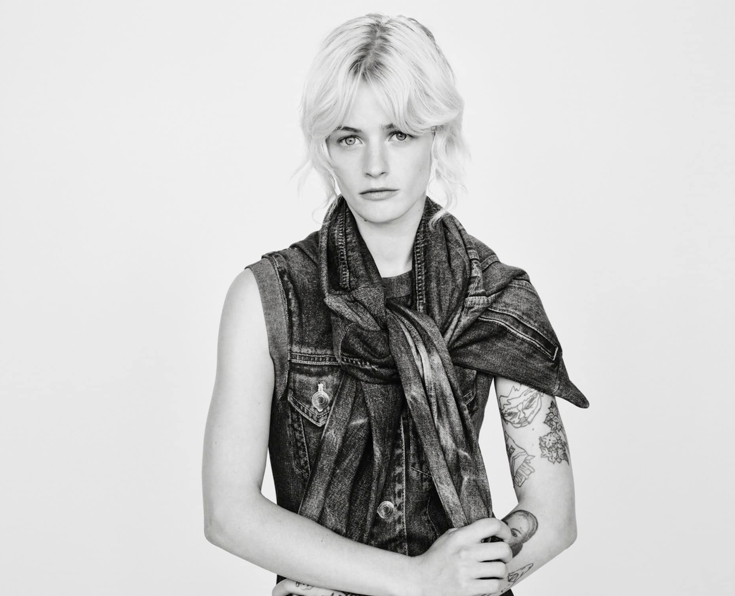
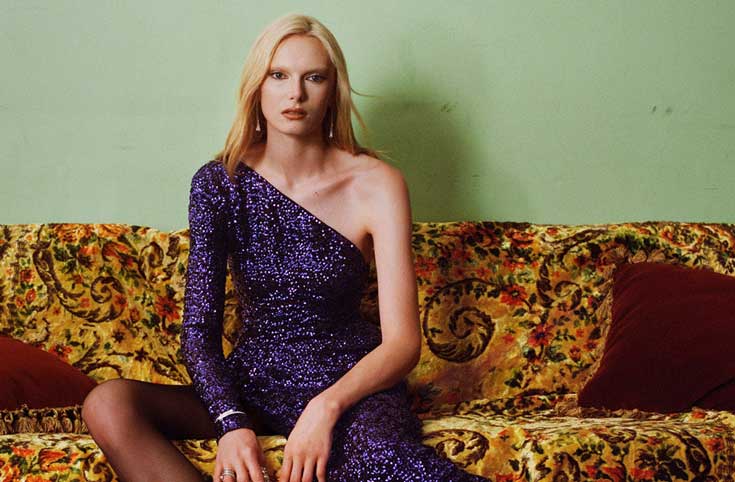
Enter Azzedine Alaïa and Christian Dior – Two Masters of Haute Couture from Damiani Books, releasing in Europe May 14, edited and written by Olivier Saillard. Emerging from the recent Paris exhibition staged at the Fondation Azzedine Alaïa, the book extends a curatorial dialogue first explored in physical form, where around 70 garments were placed in deliberate conversation across time. Rather than tracing a linear history, the publication mirrors the exhibition’s premise: a nuanced exchange between Alaïa’s own work and the Dior pieces he spent a lifetime collecting. These juxtapositions reveal a shared discipline – a devotion to cut, structure and the female silhouette – while also drawing out moments of contrast that underscore each designer’s singularity. Rooted in Alaïa’s extraordinary archive, which includes hundreds of Dior garments acquired over decades, the book captures both the emotional and intellectual resonance of this relationship, offering a study in influence, admiration and enduring creative kinship.
Here, we chat to Carla Sozzani, Italian editor, gallerist and president of the Fondation Azzedine Alaïa – as well as one of fashion’s most influential cultural figures – who has written the foreword and co-edited the book, about the exhibition’s poetic scenography, the intuitive process behind pairing garments across eras and how Alaïa’s philosophy of collecting continues to shape her work today.
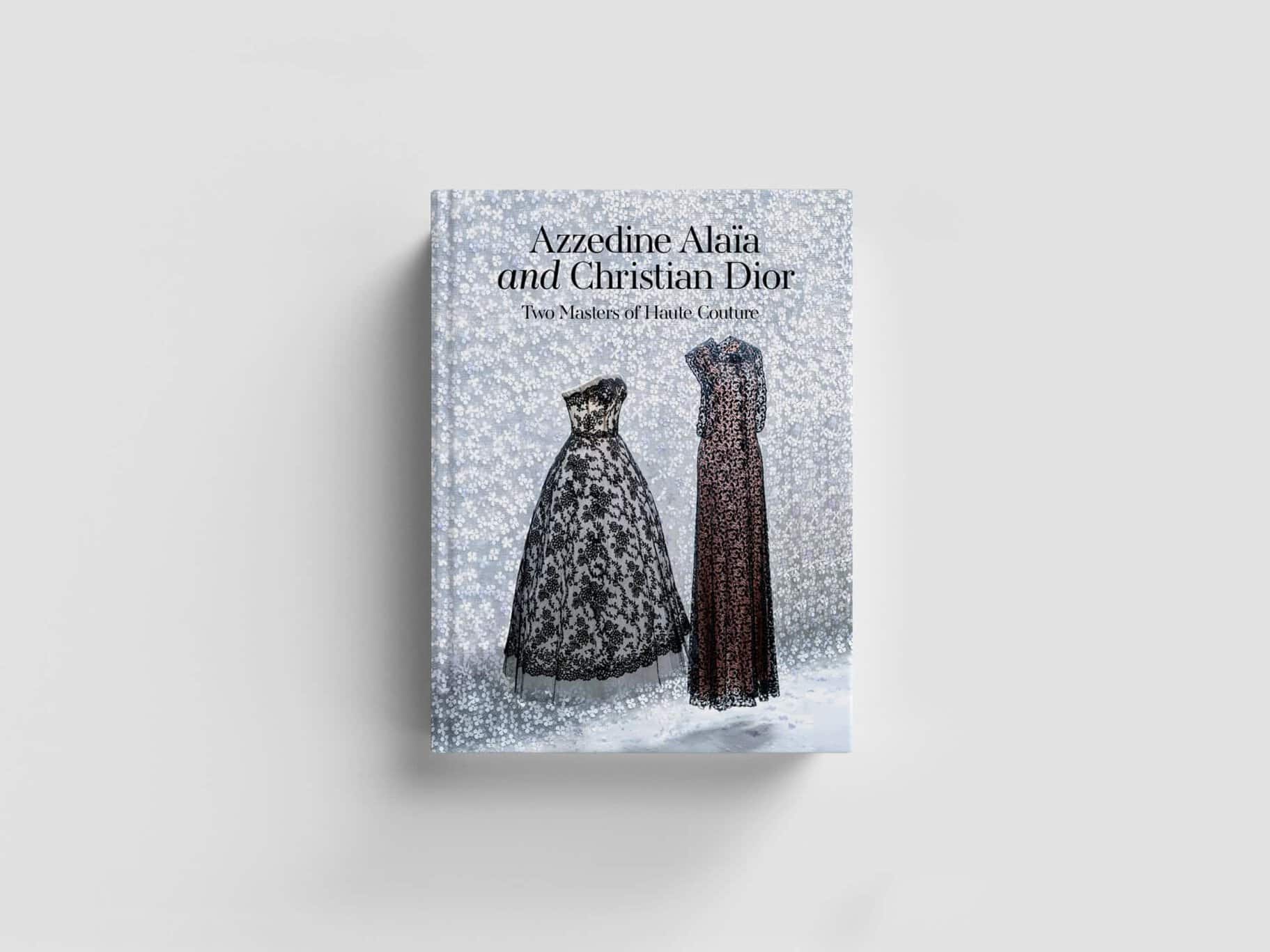
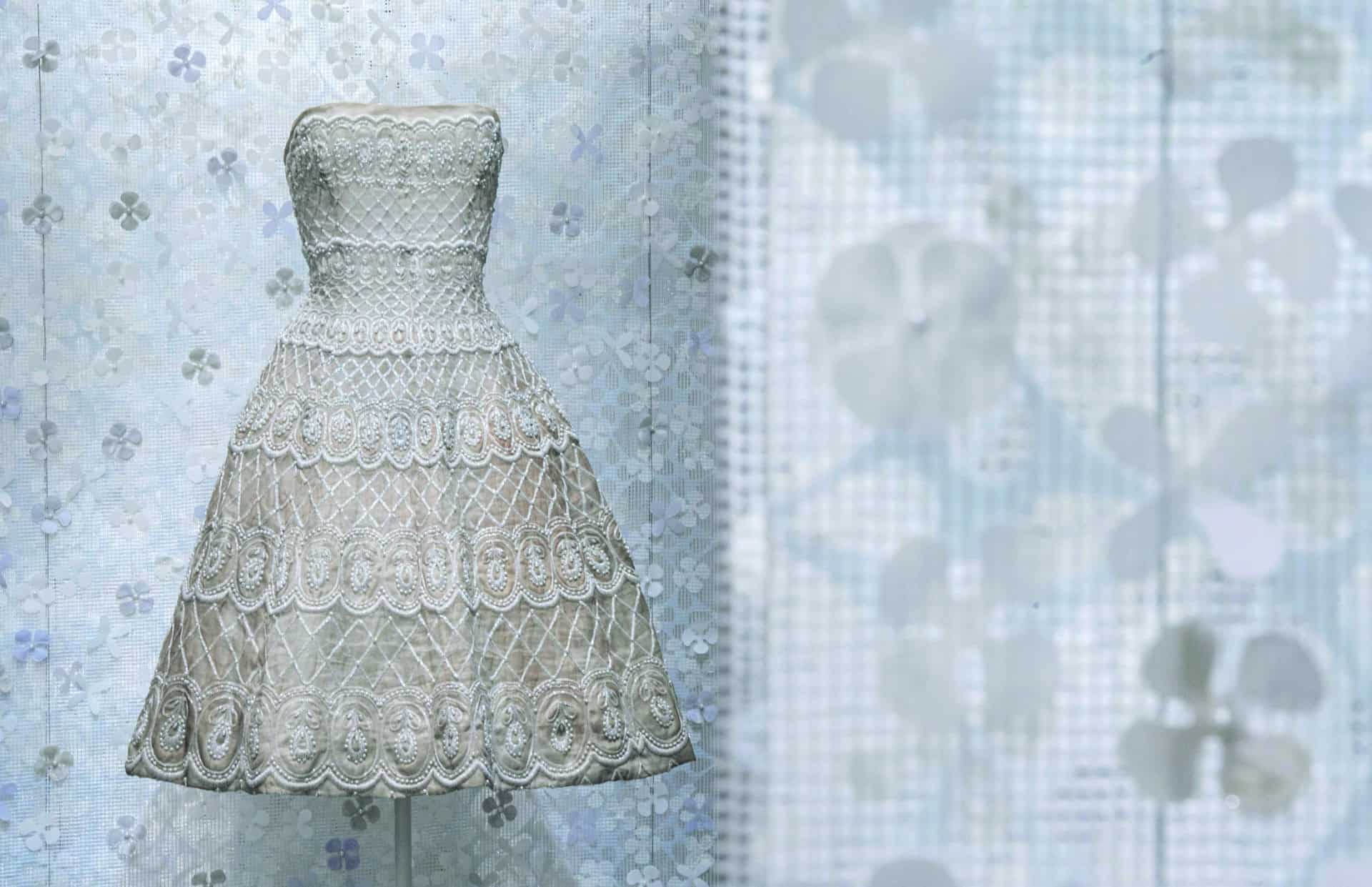
The book Azzedine Alaïa and Christian Dior: Two Masters of Haute Couture opens and closes with extreme close-ups of the floral paillettes which backgrounded each model in the exhibition rather than the clothes themselves. Can you tell us more about this choice?
Olivier Saillard invited the artist Kris Ruhs to create a scenography inspired by his Hanging Garden Installation at Azzedine Alaia’s gallery in 2015. Drawing on Christian Dior’s love of flowers as well his own sensitivity to nature, Ruhs conceived a series of white canvas panels entirely hand-painted and adorned with more than 70.000 flowers and pearls, each one unique.
Azzedine Alaïa coveted nearly 600 Christian Dior pieces for his collection in his lifetime. What was the process behind the selection of the garments for the exhibition?
The selection was guided by a desire to reveal a conversation rather than to create a retrospective. From Alaïa’s extraordinary collection, we chose pieces that could enter into a direct dialogue with his own work, through form, construction, and spirit. Certain silhouettes, techniques, or gestures echoed one another across time. It was a very intuitive and sensitive process, led by the eye and by the emotion of Olivier Saillard.
You’ve spoken before in this magazine about how Alaïa helped you understand your own vast wardrobe as a collection. How did the wisdom he imparted on you in this vein impact your approach to this exhibition, and your wider work within the foundation?
Azzedine taught me to look at garments not as possessions, but as testimonies of time, of culture, of creation. He gave me the awareness that a collection is a responsibility: to preserve, to understand, and to transmit. This has deeply shaped my approach and my work at the Foundation, The archives are not static; they are alive. They are here to be shared, to educate and to inspire future generations of creatives.
Many have credited you with bringing Alaïa back to the runway in 2003 with a collection that saw the designer “renounce the merely good in pursuit of excellence,” as Saillard puts it. What emotions are conjured when you revisit garments that you, in ways big and small, played a role in creating?
A sense of peace, for having always remained close and faithful to Azzedine – in friendship as in work – and a deep pride in having received from him the same total devotion. Each dress is a memory, and each memory carries an emotion. Above all, there is the profound feeling of missing the time we shared together.
Did you discover anything new about Alaïa during the production of this exhibition?
Azzedine used to say “everyday I wake up wondering what I will learn today”… He was right. Every exhibition becomes a new discovery. His work spans over 60 years of creation; just when you think you know it, something reveals itself again. It is an extraordinary experience, one that brings me closer to him every day, with deepest admiration.
Alaïa once said, “A dress holds three memories: the memory of the couturier who made it, the atelier that realised it and the woman who wore it.” How did this philosophy manifest in this exhibition?
It is at the heart of the exhibition: for both Christian Dior and Azzedine Alaia each dress carried the gesture of the couturier, the craftsmanship of the atelier and the presence of the woman who would wear it. Hopefully the exhibition is a place where all these values are shared and will continue to speak across generation.
The exhibition highlights fashion’s fluid historicism by bringing these two master couture together in one space. What do you hope the next generation of designers can take away from seeing this dialogue taking place so directly?
For the next generation, this dialogue is an invitation to build their own voice, rooted in history, yet independent of trends. Fashion moves forward not by breaking with the past, but by listening to it. Dior and Alaïa, though from different times, share a common discipline: rigour, respect for the body and an absolute dedication to creation. To see them together is to understand that innovation comes from knowledge, from patience, and from freedom. Could you aim to have these back to us by the end of next week?
Photography courtesy of Damiani Books.