Salone del Mobile Is Where Fashion Flexes Design Credentials
All aboard the design train to Milano! Not for the fashion – although, kind of. It’s Salone del Mobile, and Tenners, you know the drill by now: it’s the city’s annual design extravaganza and barely needs an introduction. But just in case, let’s say it’s the design world’s most important and historical annual meeting of minds and, as of the last half decade, is the fashion industry’s favourite place to flex its extra-curricular design credentials.
Few occasions provide fashion brands this kind of airtime with the people who have spending power and serious helpings of cultural clout, as well as with eager future customers who will happily queue for an hour for a limited-edition tote bag. Aligning oneself with the legacies of Franco Albini, Gio Ponti and the Alcovas of the world, given that serious gravitas now comes from rooting a brand in graft and craft, also makes it something of a no-brainer.
That said, it’s not an easy time to be a fashion brand at Salone del Mobile. If you’ve been following our coverage for the last few years, you’ll know that everything about it – from the size of the schedule and the amount of stirred up negroni sbagliati to my personal step count – has been growing steadily. Last year, it reached fever pitch, with no fewer than 45 fashion brands holding activations. And the busier it gets, the more questions are asked about who deserves to be there.
No surprise, then, that the fash pack’s presence is first in the line for scrutiny. A recent Karla Otto report said that many design professionals believe the dominance of fashion brands creates a dilution for design and the deluge of freebies is frowned upon – ouch!
If we park the brands that have an established home design offering for a moment (see Armani/Casa, Ralph Lauren Home, Loro Piana and Fendi Casa et al., which always have something notable to see and say), the general consensus is that the brands which don’t ordinarily exist in the lifestyle space need to show up with something that feels enriching and authentic, as opposed to something incongruous with a “slap a swing tag on a cult chair” subtext (as was so eloquently put by a close industry insider).
Luckily for us, this year they got the memo (underestimating fashion’s appetite for a challenge is a fool’s errand) and made their design-moment-à-la-Milanese count with experience-heavy events that genuinely wowed the crowd. This year it was less about having a tangible offering and was more focused on in-person multi-sensory immersions, a direction that is impossible not to contextualise in our polarising AI era. Let’s just say that at this design week, you had to be there to see it.
And there I was, prepped and stretched to beat my previous step count around the city (I predictably smashed it on day one with 30,000) and armed with my tried-and-tested tips and tricks. It goes without saying that anything other than spongy soles can do one during Salone del Mobile, and handbag essentials should be kept to a minimum (Loewe Puzzle bag it is). My uniform is always one of trusted Nike's (always Rifts, aka God’s gift to my feet), tailored trousers (this year barrel-legged from COS), embroidered cotton camisoles (always vintage) and three JW Anderson blazers on rotation (staples so good they could give PJs design-core credentials).
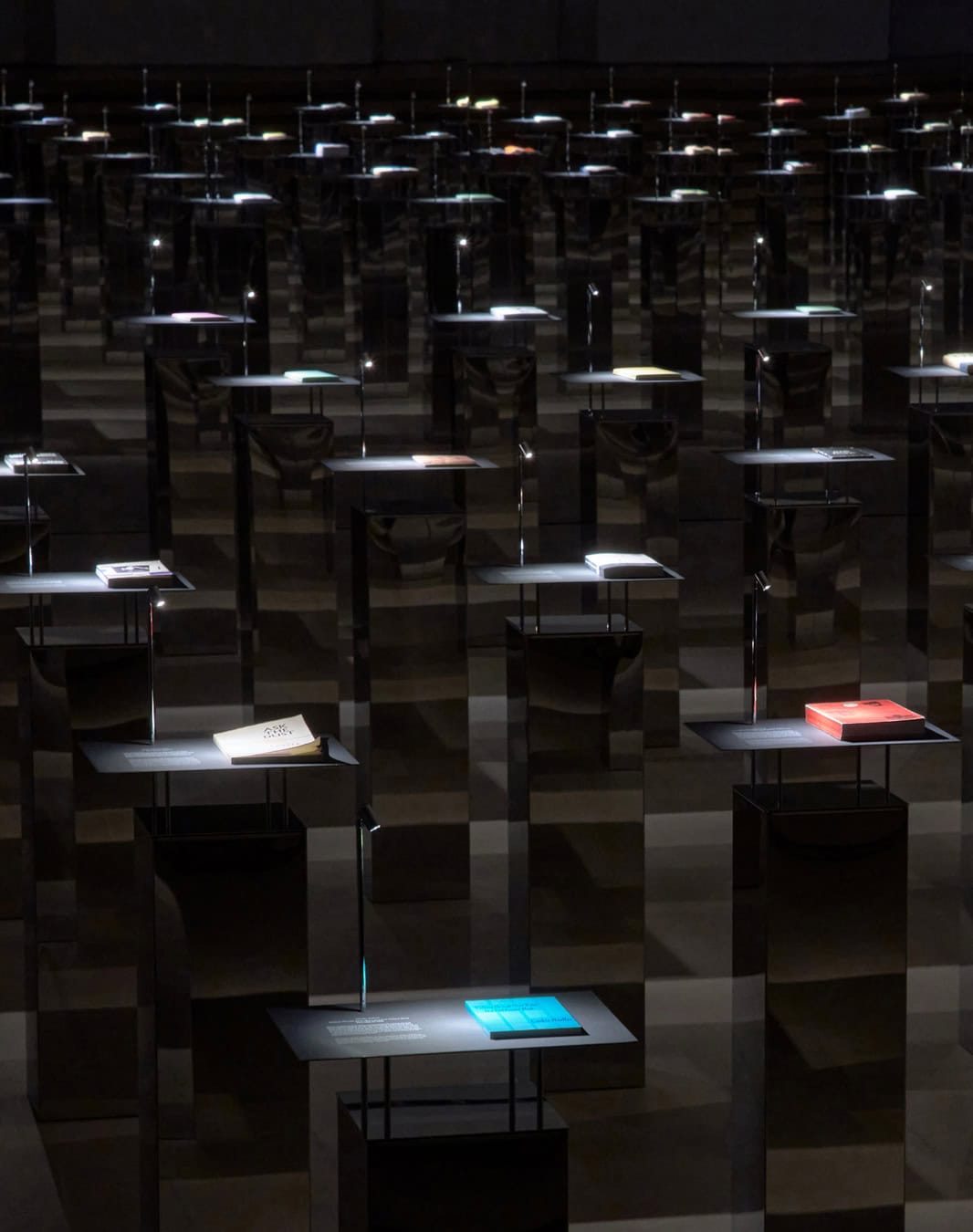
I kicked things off on a gloriously sunny Sunday afternoon at Jil Sander HQ, where creative director Simone Bellotti had transformed the space usually reserved for casting, collections and catwalks into the Reference Library. Comprising 65 mirrored chrome plinths designed by Studioutte, a book chosen by a friend of the house rested atop each. My absolute fave was Gloria Steinem’s The Beach Book (1963), chosen by artist Ariana Papademetropoulos. It’s full of practical advice, like “things to read while laying on one’s stomach”. Fabulous.
I then headed out into the sunshine to see young designer Gustav Craft deservedly pick up the very first Fendi Design Prize, where Maria Grazia Chiuri was rapturous in applause. The brief was to be inspired by the Fendi homestead in Rome and I liked that Craft said he looked down to the cobbled streets for inspiration instead of up to the sky, as everyone tells us to do. As I was leaving, I remembered that around the corner in the beautiful shopping arcade Galleria Vittorio Emanuele II, Italy Segreta – one of my favourite mags and Insta accounts, it documents the reality of life in the lesser-known regions of Italy – was holding its first book launch at the Camparino bar, so I popped in to say congrats to its twin co-founders Marina and Cesare Cacciapuoti, who were toasting their success with a Campari Shakerato (look it up and you won’t regret it).
The rest of the day continued to be dominated by food and drink that demanded I get involved (hard, yes, I know). The always inventive Laila Gohar was launching her collaboration with Arket at the Giardino delle Arti so I popped my head into the garden to witness the London Vegetable Orchestra delight the sunset crowd (think carrots as flutes and courgettes as saxophones). Then I beat it back across town to see Marni’s takeover at the legendary café Pasticceria Cucchi, where the aperitivo flowed and the crowd spilled out all over the street. I know better than to burn the candle on day one these days, so feeling incredibly virtuous I skipped an invitation to my favourite bar, La Belle Aurore, for an early night in order to hit the ground running the following day.
From left; Loro Piana’s exquisite plaids, which take more than 500 hours to make, Armani Casa’s Logo lamp, designed by Mr Armani in 1982, Aesop’s very first lamp, the Apose; Bottega Veneta’s intrecciato-esque light sculpture, created with artist Kwangho Lee, the second chapter of Armani/Archivio, which reissues hero pieces from classic Armani collections, Fendi updates the Baguette with 20 new re-editions
Two moka pots devoured and SPF50 on, first up was Aesop. Once again taking over the Chiesa di Santa Maria del Carmine, it was presenting its very first lamp – the Apose – and filled the sacristy with thousands of glass bottles that bounced its amber glow around the room. Smelling suitably of geranium, I walked through the park to another divine space, the courtyard of Santa Maria delle Grazie – home to da Vinci’s The Last Supper and, for the duration of Salone, the Prada Frames symposium. Created in collaboration with design studio FormaFantasma and curated by Alice Rawsthorn, this year’s theme was ‘In Sight’ and explored image-making as a tool for expression, representation, a political force and more.
At the talk I attended, the American artist, photographer and historian Deborah Willis presented the most glorious deep dive into the ground-breaking body of work by photographer Gordon Parks during his documentation of the Civil Rights Movement in 1950s/60s America, followed up by Gideon Mendel discussing his early reportage photography in South Africa with curator Natalia Grabowska. As ever, I could have sat there all day, but a date with Demna called.
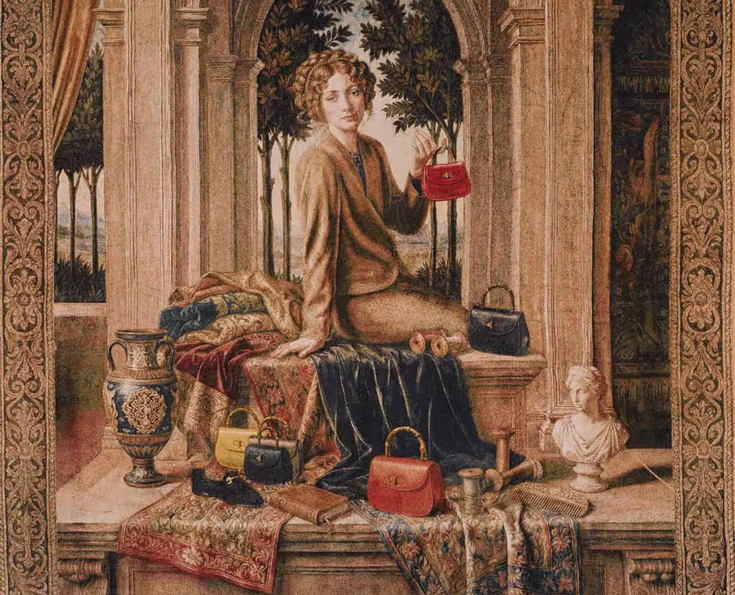
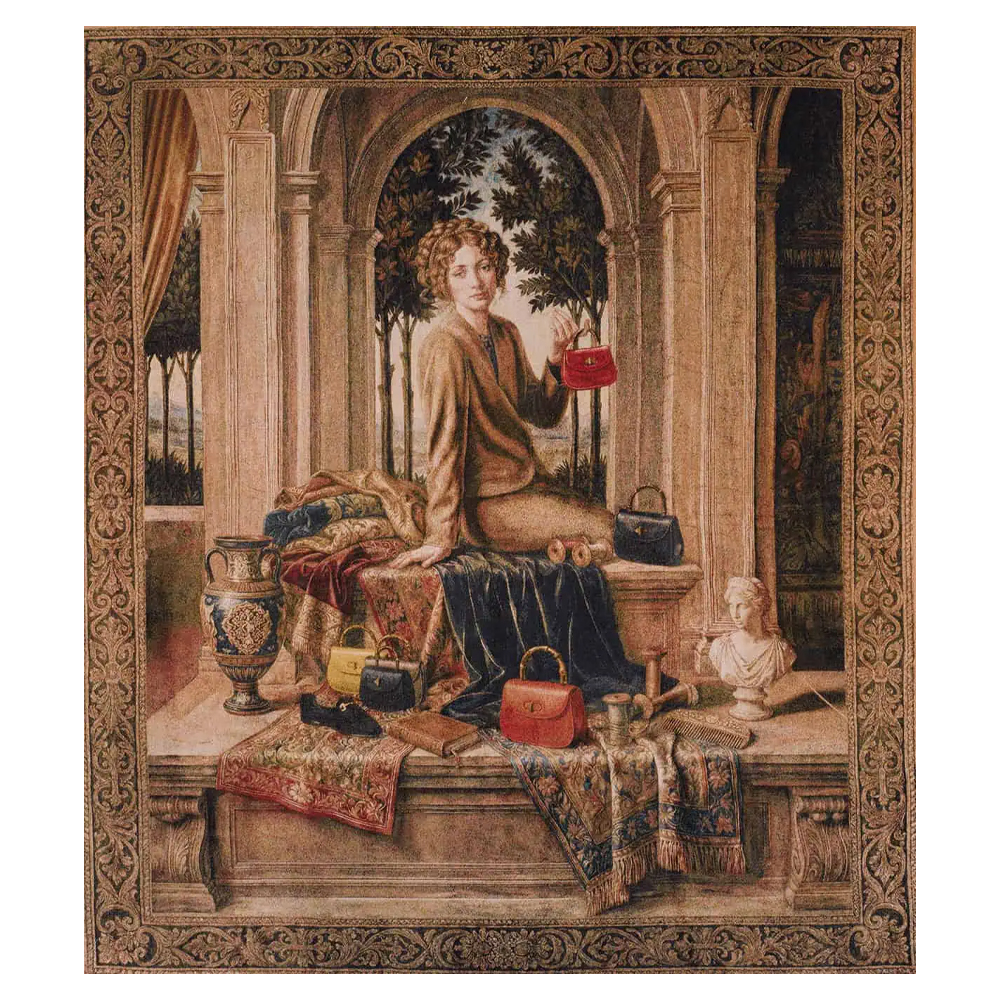
Gucci’s creative director had taken over the cloisters of Chiostri di San Simpliciano (Milan does give good churches) to exhibit his retrospective of the maison’s 105-year history. Taking the form of 12 tapestries that charted Guccio Gucci’s early days in London and culminating in Demna’s own image as a baseball-capped protagonist, it was surrounded by a garden of flowers. Guests sipped on baby cans of Fashion Icon and Drama Queen pop delivered through a Gucci-branded vending machine – possibly the ultimate Kool Aid, I thought, as I drank it.
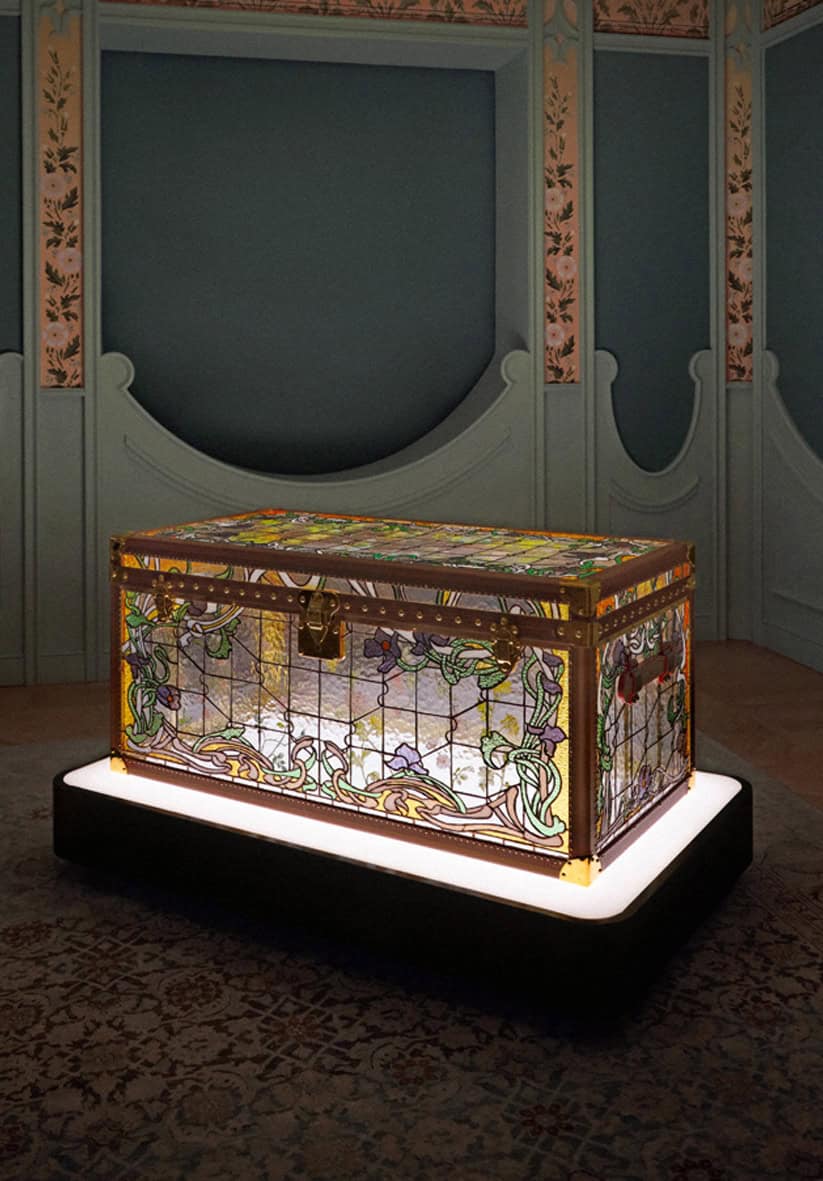
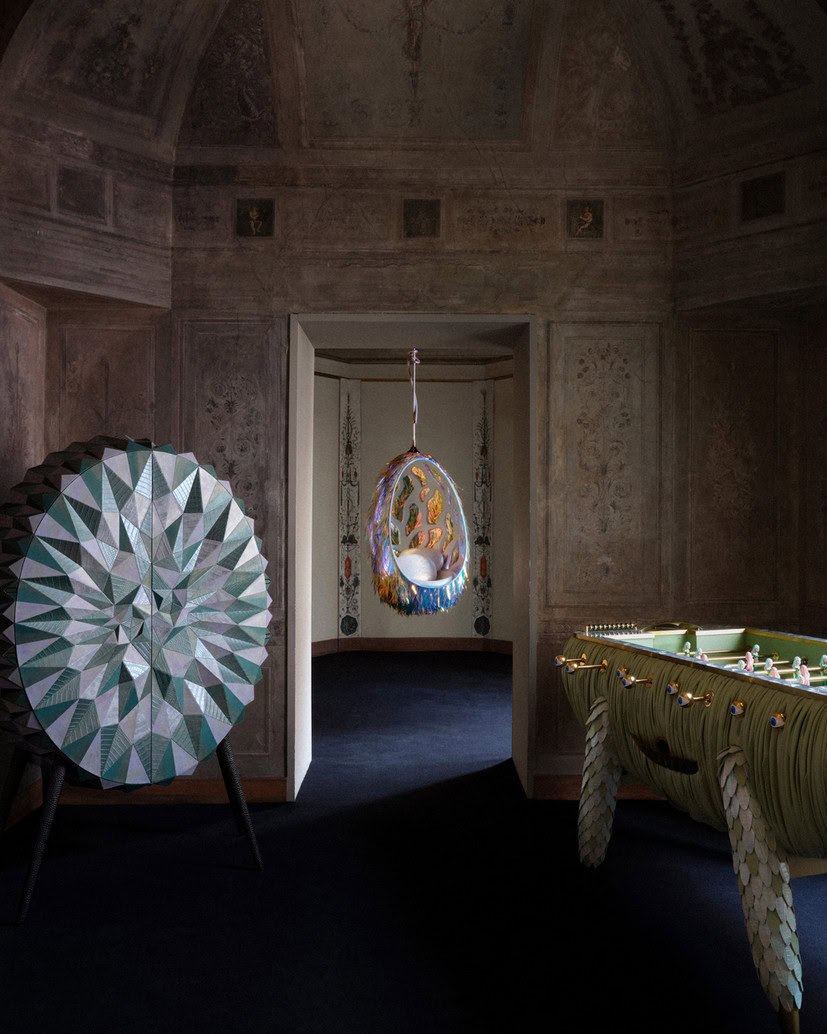
It put a pep in my step for the rest of the appointments on the list and after a quick pitstop at my forever favourite Il Salumaio di Montenapoleone (tucked off the main stretch in a courtyard where the locals perch al banco with a white wine and a deli salad), Louis Vuitton’s Objets Nomades at Palazzo Serbelloni was next. Its dedication to the famed trunks that defined the golden era of travel were perfectly represented in a room transformed into a 1920s train carriage complete with an artist’s case, with its paints and brushes and all manner of beautiful travel accessories taken from the Louis Vuitton Heritage collection.
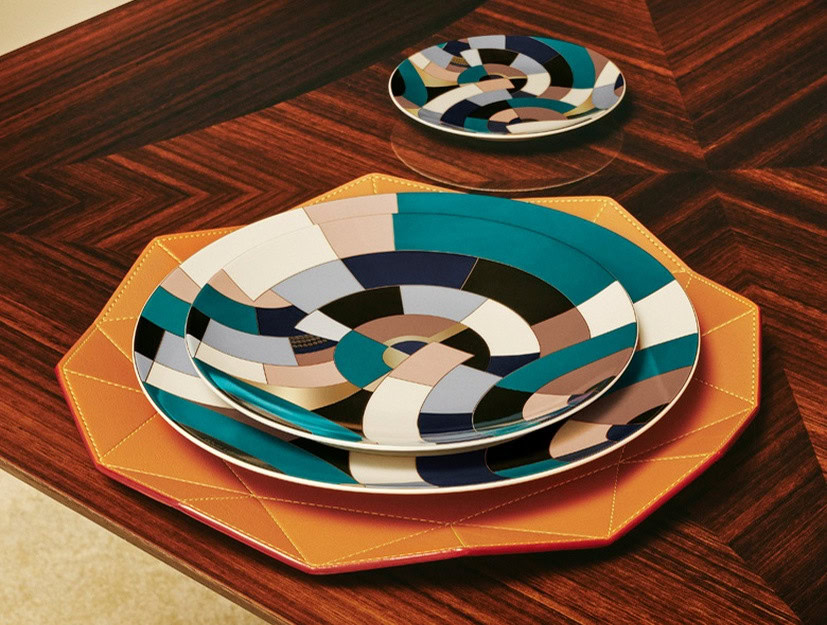
From Vuitton to Hermès’s home collection, with its tagline ‘The material speaks, the object tells a story’, at La Pelota, where the collections just make you want to throw out everything you own and live in a cashmere cloud of Hermès. The details are what make the difference – ombre cashmere, leather intarsia and Verde Alpi marble – and of course all those precision whipstitched details, suede tassels and horse-hair trims that hark back to the brand’s equestrian roots. As I was told, the first Hermès client was a horse and the brand never forgets it, which made me smile.
I should have brought my calculator for my next appointment at Loro Piana, where I quickly lost track of the number of hours required to make its exquisite plaids, as presented in its case study ‘Studies, Chapter 1: On the Plaid’. I noted 780 hours for one, 540 hours for another, 1,050 for a particularly charming quilted design and a whopping 1,860 for the grand finale, the Sherazade Notte, featuring glass beads and cashmere appliqué.
Dazzled by the digits, I navigated back through the crowds to see Issey Miyake’s charming collaboration with Ensamble Studio, which saw the paper used for creating those famous pleats repurposed into seats (first used at the brand’s SS25 show) and structures for the home, followed by a cocktail at Bottega Veneta’s sumptuous Milano flagship where its fashion week collaborator Kwangho Lee used strips of that gorgeous leather to conjure an intrecciato-esque light sculpture.
The rest of the week rolled on at a similar pace. It was relentless, yes, but worth it? Absolutely. Getting to see the first Armani Casa collection since Mr Armani’s death last year was a special moment. Every other time I had visited during Salone, the main man was always there in person, but six months after he left us his design eye could still be felt all over. For this Salone, the team recreated new editions of his favourite designs – like the Logo lamp he designed in 1982 – in homage to their founder. My favourite bit of trivia was that the reason the Winchester screen exists is because Mr Armani liked sofas to stand in the middle of a room but never wanted to see the back of them.
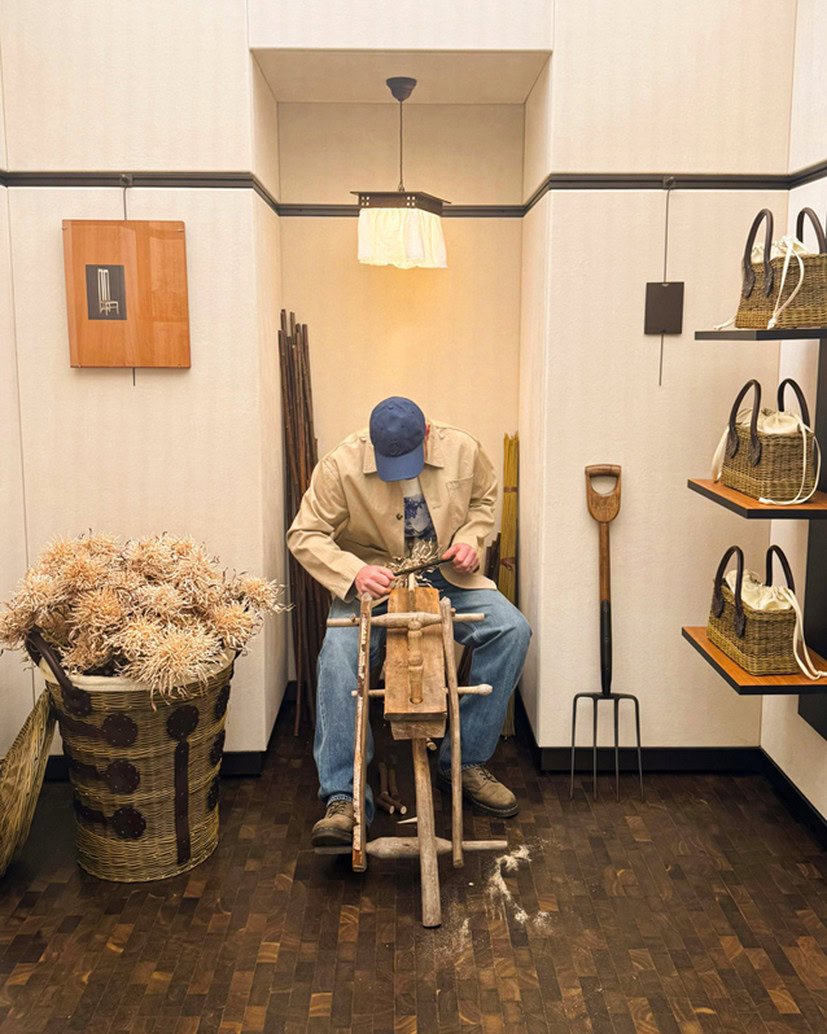
Elsewhere, others leant into what makes them great, too. At Ralph Lauren Home, the Saddlebrook collection was an homage to the Lauren family home in New Jersey and was irresistibly Nancy-Meyers-esque. At Tod’s, the Gommino driving shoe was reimagined in the style of several Italian design masters including Gaetano Pesce and Achille and Pier Giacomo Castiglioni. While at JW Anderson’s flagship, the Staffordshire-based Yeoman basketmaker Eddie Glew, who collaborated with Anderson on his AW26 handbags, held craft workshops teaching attendees how to get the look.
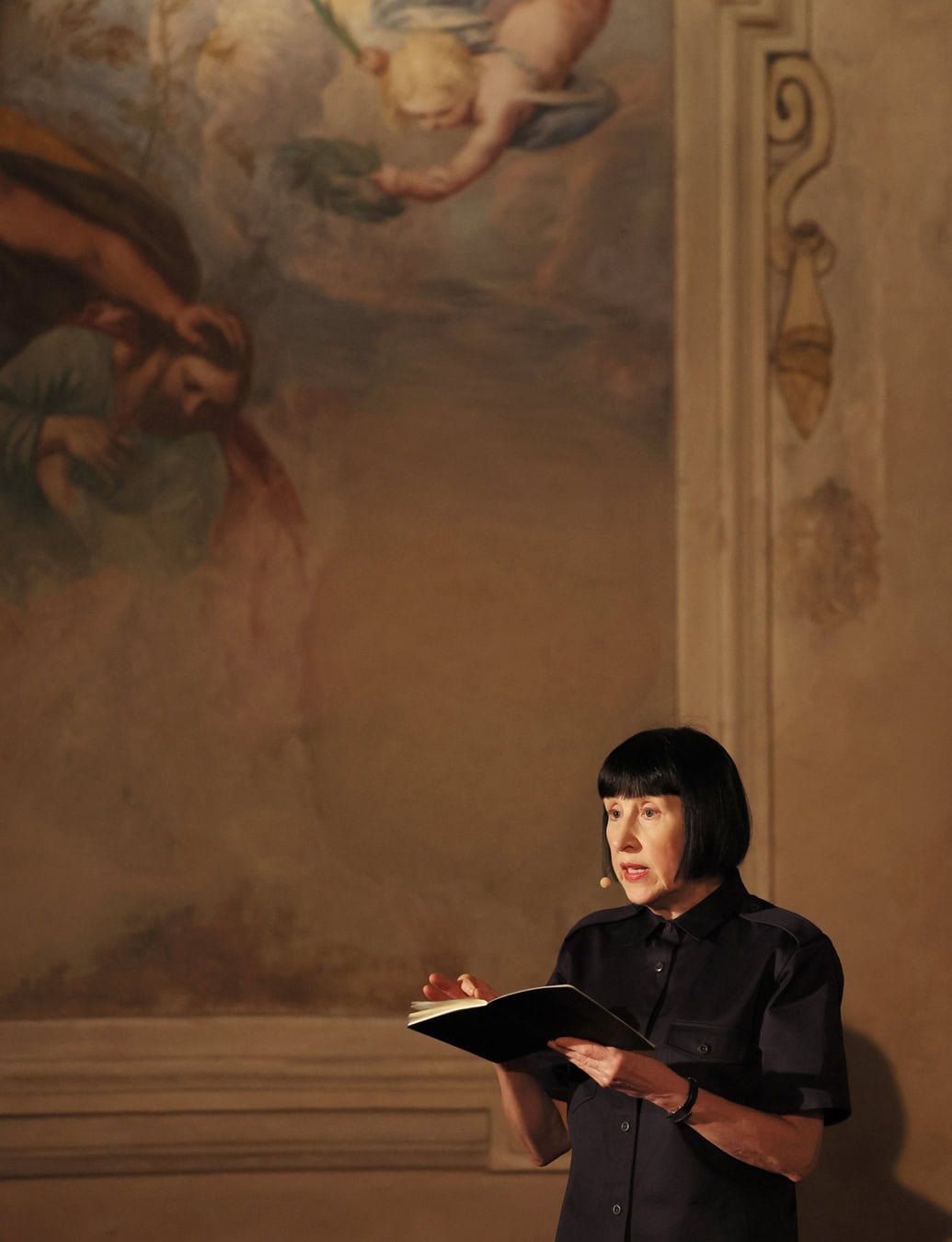
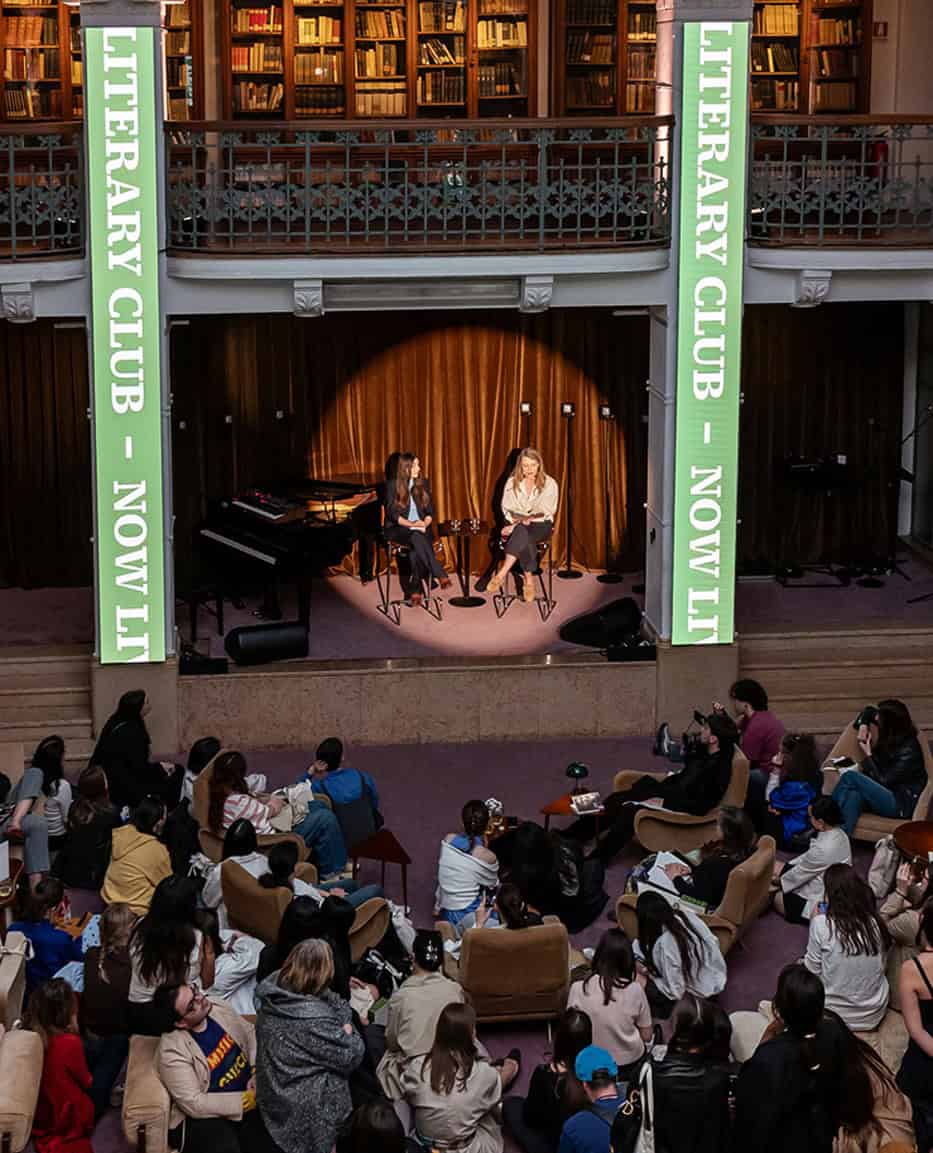
At Miu Miu, the Literary Club returned. This year’s theme, ‘Politics of Desire’, welcomed Nobel Prize winner Annie Ernaux and politician and author Ama Ata Aidoo to talk about their works (A Girl’s Story and Changes: A Love Story, respectively) through the contexts of sexuality, desire and consent.
It was left to Valextra to cap off proceedings with a cocktail celebrating its collaboration with Objects of Common Interest at the unofficial-official watering hole of design week, Bar Basso. As I looked around and the adrenaline of the last few days started to die down, I couldn’t help but think that so did the critique around the increasing presence of fashion brands.
Far from dilution, they served up something important that was rich in experience and empathic in feeling. Something that Simone Bellotti had shared at the very start of my Salone came to mind: “There is a concentration of curiosity in the city during [Salone del Mobile] that is hard to find anywhere else. Everyone is looking closely, asking questions, making connections. That atmosphere is rare and genuine.” And Tenners, he’s right. As we know, the magic of most things is found in the mix.
Top image: One of 12 tapestries commissioned by Demna to chart Gucci's history