Roksanda On Her Staying Power
What does it take to build a fashion business in London with true staying power? Surviving and showing as a British-based brand takes more than catwalk plaudits. Talent wins attention, but grit, ingenuity, the ability to adapt to changing circumstances and a deep, supportive network are the common threads behind who thrives and who becomes a footnote in fashion history.
ROKSANDA
Twenty years is a long time in fashion, reflects Roksanda Ilinčić, 50, who launched her label in 2005 with a 12-piece collection, shown salon-style at the Michelin building in South Kensington. “I look back at those first baby steps when I entered the business without even knowing what it was, or how much courage, teamwork, blood and tears would be required to get this far,” she says. In September, she staged a triumphant 20th anniversary show in the vast ballroom of Mayfair’s Chancery Rosewood, London’s newest and zhuzhiest five-star hotel. “It was a wonderful moment and also beautiful to see how much the brand has evolved,” she reflected. But it was a moment that was almost snatched from her.
Last year was her annus horribilis, when it looked like Roksanda might go the way of so many London brands. The year started well when Ilinčić collected her MBE for services to fashion in January. Then, in March, Matches Fashion, one of her biggest stockists, went bust, owing millions to independent designers. By April, her Mount Street flagship, which she opened in 2014 with interiors designed by David Adjaye (it was all herringbone marble floors, plush pink carpets and jewel box fittings), had closed down. A few weeks later, she parted ways with her financial backer Eiesha Bharti Pasricha, who had held a majority stake in the brand since 2014. Following this, Roksanda’s 19-year-old label cited “recent volatile market conditions” as it too headed for administration. But by May, its fortunes had changed for the better and it was scooped up by The Brand Group, a London and Hong Kong-based luxury investment firm, with the Serbian designer remaining as creative director.
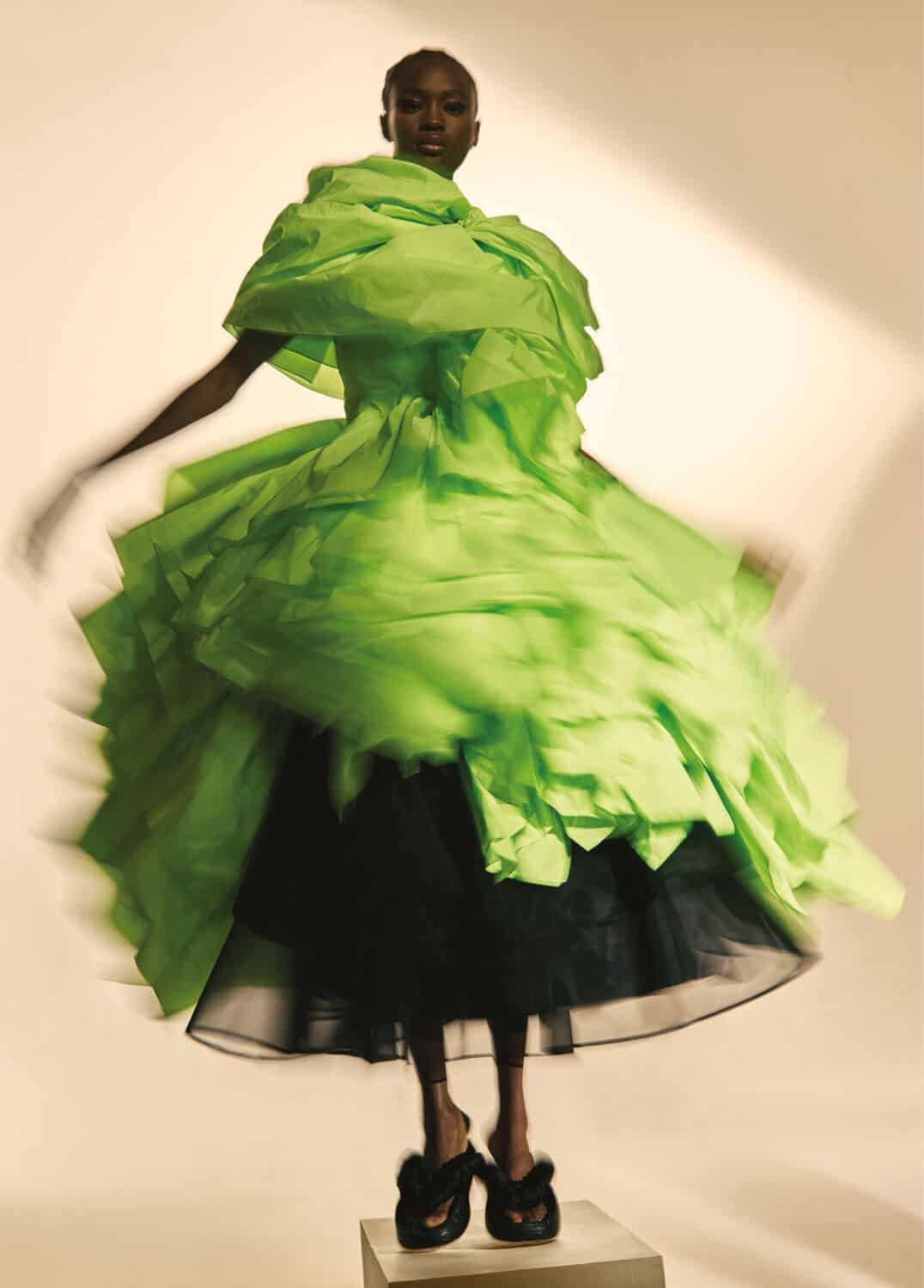
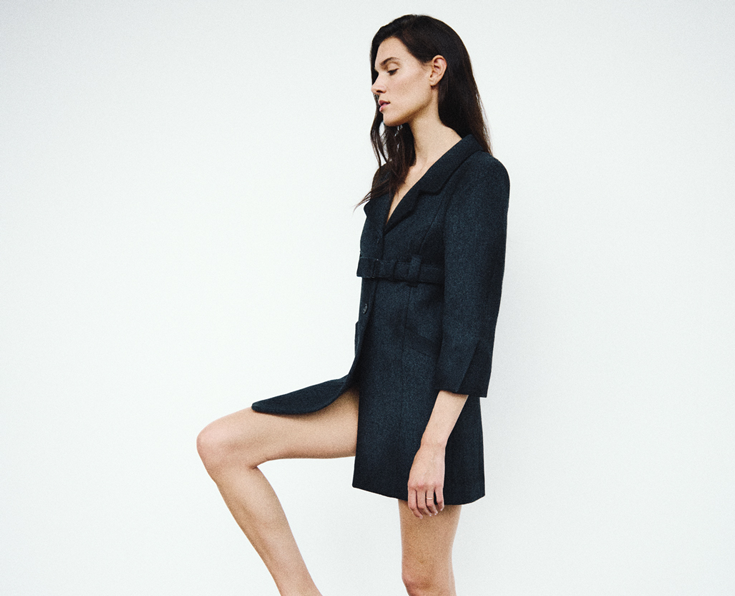
This year has been one of consolidation and growth. Roksanda expanded the reach of her brand through colourful collaborations with Jigsaw, & Other Stories and FitFlop, as well as designing costumes for a Marina Abramović performance art piece. Roksanda is known for dressing many artists and architects but, in 2025, she’s proved that her signature vivid colours and voluminous architectural silhouettes can resonate across many different mediums and audiences. Reflecting on the past 20 years, Ilinčić says, “The woman that I designed for the idea is still the same, which is wonderful, but at the same time, it has grown so much. It has grown to something that has its own soul, its own language, its own storytelling.”
She survived those early years with the help of a strong network of friends and collaborators. “A lot of love was felt here in London and it was necessary to have that support in order to get anywhere in your career,” she says, citing Lulu Kennedy, whose Fashion East initiative was the first to showcase Roksanda, and the PR Mandi Lennard as being particularly influential on her early success.
She formed close relationships with her peers. Designers like Richard Nicoll, Erdem Moralıoğlu, Christopher Kane and Jonathan Saunders were friends, not rivals (she notes, too, that until the emergence of Simone Rocha, Martine Rose, Charlotte Knowles and Molly Goddard, she was the only woman in this group of catwalk stars). “We didn’t have the luxury of entering a particular department store, for example, as designers maybe do in America, and then automatically you would be opening 40 doors. The landscape and buying power here was more limited.” They all shared information and contacts. “We grew together with the same problems, with similar solutions that we had to take in order to survive. “I always believe there is a way to resolve the issue in a creative way. That is the beauty of being a designer – there is always a creative solution” In all the other cities, designers would compete and be quite unfriendly towards each other.”
She also notes that her generation had to find a way to balance fashion fantasy. “The wonderful, dreamy, incredible shows that were happening back in the ’90s were gone and we had to come up with a different proposal that brought the excitement of doing fashion, but was there to be sold in shops. We had to make sure those orders would reach the stores, reach them on time, have good sell-through and build a certain relationship with our customers as well because the times were much tougher.”
The toughest year of all was 2020. “The lockdowns stopped the need for luxury fashion, the entire desire of anybody to dress up,” she says. She quickly pivoted from big gowns to knitwear “because that was something people were buying”. Her storytelling also adapted to Covid – she created a film starring the Redgrave acting clan for one collection and, at the height of social distancing, staged a memorable one-on-one walk-through show in a King’s Cross penthouse.
Her message to younger artists and designers is this: “They need to be prepared to very quickly react to very hostile and strange times, with very unknown problems, and they need to find a way to solve them. I always believe there is a way to resolve the issue in a creative way. That is the beauty of being a designer – there is always a creative solution no matter how hard the problem is.”
Taken from 10+ UK Issue 8 – FUTURE, JUBILEE, CELEBRATION – out now.
STAYING POWER
Photographer HARRIET MACSWEEN
Fashion Editor GARTH ALLDAY SPENCER
Text CLAUDIA CROFT
Model MOFEOLUWA ONASANYA at PRM Agency
Hair TOMI ROPPONGI at Julian Watson Agency using BUMBLE AND BUMBLE
Make-up MEGUMI MATSUNO at Of Substance using DIOR Forever Foundation and DIOR Capture Le Sérum
Digital operator MARIA MONFORT PLANA
Photographer’s assistant CAITLIN CHESCOE
Fashion assistants GEORGIA EDWARDS and SARA OJALA
Production ZAC APOSTOLOU and SONYA MAZURYK